No products in the cart.
Continue
Meor Hazayis Devarim 5785
מאור התורה
תורה מגנא ומצלא
מי האיש החכם ויבן את זאת ואשר דיבר פי ה’ אליו ויגידה על מה אבדה הארץ וגו’ ויאמר ה’ על עזבם את תורתי וגו’ ולא שמעו בקולי ולא הלכו בה (ירמיה ט, יא-יב).
בגמרא (נדרים פא, א) הקשו על כפל הלשון שבפסוק “ולא שמעו בקולי ולא הלכו בה”, היינו לא שמעו בקולי היינו לא הלכו בה. ותירצו, אמר רב יהודה אמר רב, לומר שאין מברכין בתורה תחילה. וביאר הר”ן (ד”ה דבר) בשם רבינו יונה, שמדוייק מן הפסוקים שהכוונה לחטא זה דוקא, שהרי דרשו שם בגמרא ממשמעות הפסוקים, שדבר זה נשאל לחכמים [“מי האיש החכם ויבן”] ולנביאים ולמלאכי השרת [“ואשר דיבר פי ה’ אליו ויגידה”] ולא פירשוהו, עד שפירשו הקב”ה בעצמו [“ויאמר ה'”], ולכן ודאי צריך לומר שלא עזבו את התורה ממש, אלא היו עוסקים בה תמיד, עד שהיו החכמים והנביאים תמהים על מה אבדה הארץ, ורק הקב”ה שהוא בוחן כליות ולב ידע שלא בירכו בתורה תחילה, כלומר שלא היתה התורה חשובה בעיניהם כל כך כדי לברך עליה.
ומפורסמת הקושיא, וכי עבור דבר זה בלבד, שלא היתה התורה חשובה בעיניהם לברך עליה, בא עליהם עונש חמור כל כך, שחרב הבית ואבדה הארץ, אף על פי שהיו עוסקים בתורה תמיד. עוד ידוע להקשות, הלא אמרו חז”ל (יומא ט, ב), “מקדש ראשון מפני מה חרב, מפני שלשה דברים שהיו בו, עבודה זרה וגילוי עריות ושפיכות דמים”, ונמצא שמפני חטאים אלו אבדה הארץ ולא מפני שלא בירכו בתורה תחילה, וכיצד לא ידעו החכמים והנביאים לפרש על מה אבדה הארץ.
וביאר בזה הגאון רבי איצל’ה פטרבורגר זצ”ל (כוכבי אור מאמר ח), דהנה אמרו בגמרא (סוטה כא, א), “תורה בעידנא דעסיק בה מגנא [מן הייסורים] ומצלא [מיצר הרע], בעידנא דלא עסיק בה אגוני מגנא אצולי לא מצלא”. ועוד אמרו (קידושין ל,ב) בראתי יצר הרע ובראתי לו תורה תובלין. ואם כן צריך ביאור, כיצד באו ישראל שבאותו הדור לידי עבירות חמורות כל כך, מאחר שהיו עוסקים בתורה תמיד, ובעידנא דעסיק בה אצולי מצלא מן החטא, והיא תבלין כנגד היצר הרע. אמנם ביאור הדבר הוא, על פי מה שאמרו בגמרא (ברכות סב, ב) על מה שנאמר אצל דוד המלך (מלכים א’ א, א) “ויכסוהו בבגדים ולא יחם לו”, שלפי שביזה את הבגדים, שקרע את כנף מעילו של שאול (שמואל א’ כד, ד), סופו שלא נהנה מהם. ולמדנו מכך, שהגם שכך הוא טבע הבגדים, לחמם את האדם המתכסה בהם, מכל מקום הם אינם מחממים למי שאינו מכיר בטובתם ובחשיבותם. וכן הוא הדבר לענין סגולת התורה להציל מן החטא, שמי שאינו מחשיב את התורה ואינו מכיר בסגולתה ובמעלתה, סופו שאינו נהנה ממנה, ואין התורה פועלת בקרבו להיות תבלין כנגד יצר הרע ולהצילו מן החטא.
וזהו הביאור במה שלא ידעו החכמים והנביאים לפרש על מה אבדה הארץ, לפי ששאלת “על מה אבדה הארץ” פירושה הוא, כיצד באו ישראל לידי חטאים חמורים אלו שבעבורםאבדה הארץ, ולא ניצלו מהחטאים על ידי עיסוקם בתורה, ודבר זה לא ידעו החכמים והנביאים לפרש, עד שבא הקב”ה ופירש שלא היתה התורה חשובה בעיניהם לברך עליה, ולא הכירו במעלתה וטובתה, ועל כן לא זכו לסגולת התורה המצלת מן החטא.
מאור בחושך
ונתתי לכם לב בשר
פעם אחת בליל תשעה באב, לאחר שגמרו תפלת ערבית וקריאת מגילת איכה, יצא הגה”צ רבי אליהו לופיאן זצ”ל מבית המדרש, ויצאו התלמידים אחריו. בתחילה חשבו שהולך הוא לביתו, אך לפתע סטה רבי אליהו מדרכו, והלך וישב לו על אבן אחת. הרואים סברו שהוא רוצה לפוש קמעה או לשאוף אויר, כי היה אותו יום חם ביותר. רבי אליהו ישב לו כך זמן מה, ואחר כך החל לדבר, ואמר שיחה שלמה על עניני החורבן. התלמידים ישבו סביבותיו על הקרקע והאבנים שמסביב, ורבי אליהו דיבר בפניהם שעה ארוכה, כשאור קלוש בלבד מאיר את המקום. רבי אליהו הרגיש את צער ואבילות החורבן בכל נפשו, ודיבר בפניהם כל כך מנהמת לבו, עד שהתלמידים שנכחו שם הרגישו כאילו יושב לפניהם ירמיהו הנביא ומקונן על החורבן.
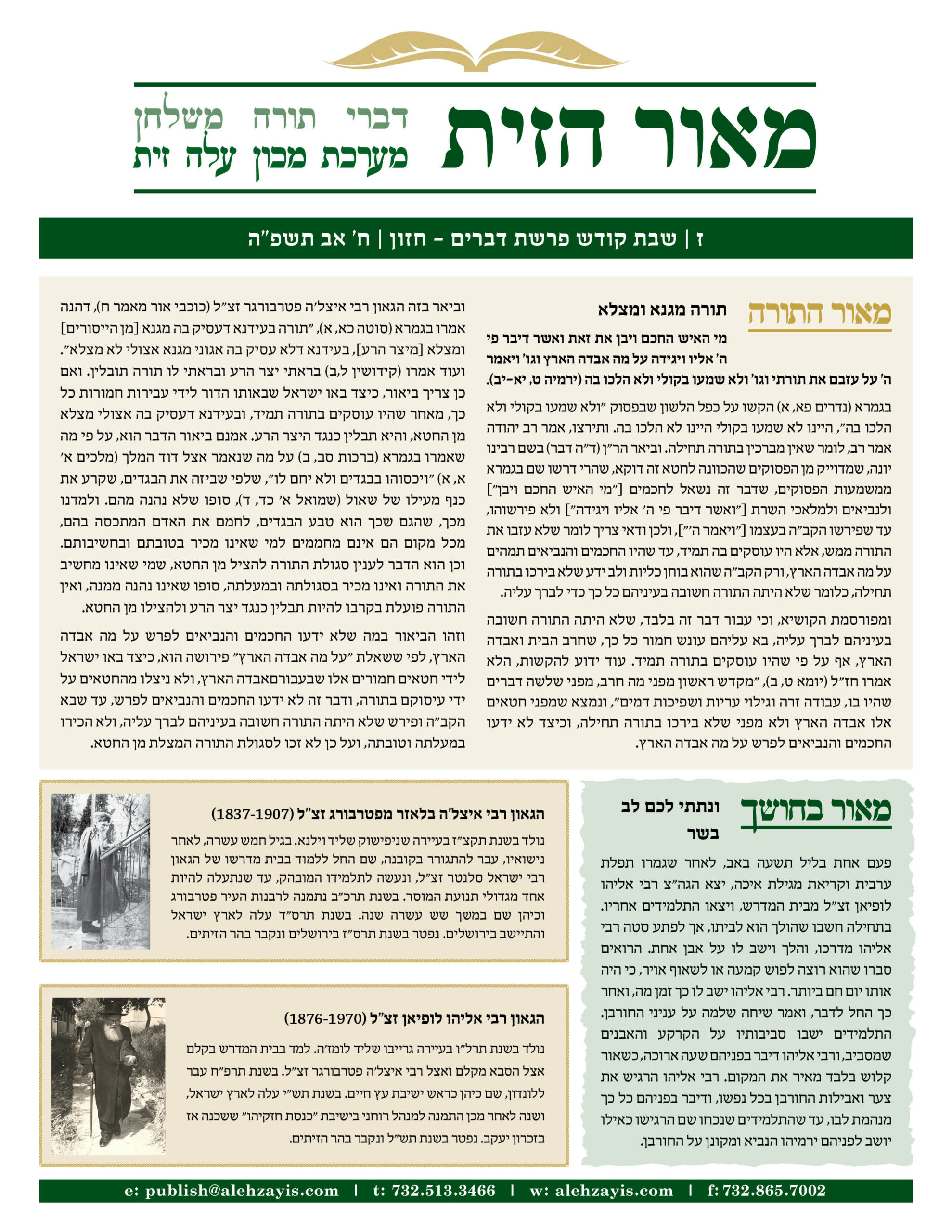
הגאון רבי איצל’ה בלאזר מפטרבורג זצ”ל (1837-1907)
נולד בשנת תקצ”ז בעיירה שניפישוק שליד וילנא. בגיל חמש עשרה, לאחר נישואיו, עבר להתגורר בקובנה, שם החל ללמוד בבית מדרשו של הגאון רבי ישראל סלנטר זצ”ל, ונעשה לתלמידו המובהק, עד שנתעלה להיות אחד מגדולי תנועת המוסר. בשנת תרכ”ב נתמנה לרבנות העיר פטרבורג וכיהן שם במשך שש עשרה שנה. בשנת תרס”ד עלה לארץ ישראל והתיישב בירושלים. נפטר בשנת תרס”ז בירושלים ונקבר בהר הזיתים.
הגאון רבי אליהו לופיאן זצ”ל (1876-1970)
נולד בשנת תרל”ו בעיירה גרייבו שליד לומז’ה. למד בבית המדרש בקלם אצל הסבא מקלם ואצל רבי איצל’ה פטרבורגר זצ”ל. בשנת תרפ”ח עבר ללונדון, שם כיהן כראש ישיבת עץ חיים. בשנת תש”י עלה לארץ ישראל, ושנה לאחר מכן התמנה למנהל רוחני בישיבת “כנסת חזקיהו” ששכנה אז בזכרון יעקב. נפטר בשנת תש”ל ונקבר בהר הזיתים.
מאור הלב
Emotional Response
On Tishah B’Av, we lament the churban by reciting kinnos, beautiful poetry composed by the great paytanim. Some date back to even before the era of the Rishonim.
Poetry is a form of song. Wouldn’t it be more appropriate to lament the churban in prose, using plain words to spell out the calamity that befell Klal Yisroel? Why did the Rishonim choose piyyutim – poetry – meant to be recited in a sing-song manner?
There are two parts of the brain. The ability to form words, to be able to speak, is controlled by the left side of the brain. If, chas v’shalom, the left side of a person’s brain gets damaged, he would lose his ability to speak. He would simply be unable to formulate words.
The ability to sing and to express emotions are controlled by the right side of the brain. Even stroke victims with severe damage to the left cerebral part, unable to formulate words, can still sing. Because art and song stem from emotions – the right side of the brain, and not from the intellectual and rational part of a person’s mind – the left side.
When calamity strikes an individual, he often does not have the ability to rationalize and respond by formulating coherent sentences. Rather he has a visceral emotional reaction. It may be callous to respond rationally to a tragedy.
The Gemara (Bava Kamma 38b) seems to be lauding Ulla for consoling Rav Shmuel bar Yehudah when he lost his daughter, telling him that if any good would have come of her, Hashem would not have taken her from him. For an extremely rational person that would be appropriate. But the Yam shel Shlomo (Bava Kamma 4:10) points out that the Rif and the Rosh don’t codify this approach, because it would bring more pain to the mourner, instead of consolation. The Maharshal rules that words of consolation must comfort the mourner. See also Rema (YD 376:2 and Turei Zahav cf. 1).
The initial reaction to the national calamity of the churban is a visceral and emotional cry – Why and how could this happen?! This is expressed in the first two chapters of Eicha. No rationalization and no justification of Hashem’s ways. Just a heartrending cry of “Eicha”?! Only many years later did Hashem instruct Yirmiyahu Hanavi to add the subsequent perakim in which he engages in tzidduk hadin, justifying Hashem’s ways.
The kinnus also follow this pattern. They begin with lamenting and only later do they include rationalization.
To react rationally to tragedy by immediately finding a logical explanation can stem from a hardened heart. A person who feels for Hashem and for Am Yisroel cannot formulate rational words. The reaction is an outpouring of emotion, expressed in a mournful song. Only after feeling the pain and reacting with emotion, can one turn to the left part of his brain and seek to explain the tragedy.
מאור שי”ח
דבר ה’ מירושלים
Very little is known about the time Moreinu Rav Shneur spent in Eretz Yisroel during and immediately following the war. Some details emerged in last week’s edition, prompting readers to share additional insights with Ma’or Hazayis. It turns out that Rav Shneur’s stay in Eretz Yisroel was not dedicated exclusively to the treasured relationship with his grandfather, Rav Isser Zalman, but extended to other gedolei Yisroel as well.
Rav Shneur regularly attended shiurim given by the Brisker Rov. Though Rav Shneur was widely known for his exceptional proficiency in inyanei Kodshim, few realize he honed this expertise at the feet of the Brisker Rov. Additionally, he participated in the mussar shmuessen delivered by the Slobodka Rosh Yeshivah, Rav Eizik Sher, a practice encouraged by Rav Isser Zalman. Moreover, there exists a handwritten transcription by Rav Shneur of a shiur delivered by the Yerushalayimer Rov, the ilui of Volozhen, Rav Reuvein Bengis.
A remarkable story underscores Rav Shneur’s dedication. At the farewell seudah held when Rav Shneur was preparing to leave Eretz Yisroel and join his father, Moreinu Rav Aharon, in America, Rav Isser Zalman praised Rav Shneur for never missing his shiurim delivered during the morning hours. Hearing this, the Brisker Rov immediately remarked that Rav Shneur had likewise never missed one of his shiurim, delivered in the afternoons. Rav Eizik Sher then added that Rav Shneur had similarly attended every one of his mussar shmuessen.
Perhaps the most surprising revelation about Rav Shneur’s time in Eretz Yisroel emerged in recent years. Rav Dov Yaffeh, during a visit to Lakewood, introduced himself to Rebbetzin Rishel as a talmid of Rav Shneur. Rav Dov explained that he had heard shiurim from Rav Shneur as a young bachur in yeshivah. This unexpected disclosure shed new light on Rav Shneur’s extraordinary capacity: even before joining his father’s famed yeshivah, he was simultaneously absorbing Torah from great leaders while already teaching and shaping the next generation.