No products in the cart.
Continue
Meor Hazayis Korach 5785
מאור הפרשה
ענוה אמיתית
וַיִּחַר לְמֹשֶׁה מְאֹד וַיֹּאמֶר אֶל ה’ אַל תֵּפֶן אֶל מִנְחָתָם לֹא חֲמוֹר אֶחָד מֵהֶם נָשָׂאתִי וְלֹא הֲרֵעֹתִי אֶת אַחַד מֵהֶם: (במדבר טז, טו)
בדבריו אלו, מבטא משה רבינו את תשובתו לדברי דתן ואבירם, שטענו כנגדו “המעט כי העליתנו וגו’ כי תשתרר עלינו גם השתרר”, וחשדוהו כי נתינת הכהונה לאהרן היתה מחמת רצונו להשתרר עליהם, ועל כן נתן שררה גם לאחיו. ועל זה חרה למשה מאד ואמר, הלא לא נהגתי עמהם כדרך המשתררים על הציבור, שלוקחים מהם את החמורים הנצרכים להם וכדו’. והוסיף משה רבינו ואמר “ולא הרעותי את אחד מהם”, כלומר לא התנהגתי עמהם כדרך המשתררים על הציבור שמשתעבדים בהם וגורמים להם רעות. וצ”ע, איזה חידוש הוא שלא הרע להם.
וקודם שנביא את פירושו של המשך חכמה, נקדים את דברי המסילת ישרים (פרק י’א) שיש אנשים המתנהגים בענוה, ומשפילים ומכניעים את עצמם לפני אחרים, אבל אין בתוככי לבבם ענוה אמיתית, וכל כוונתם היא רק כדי שיהיו ענוים בעיני הבריות. וז”ל המסילת ישרים “ימצא גאה אחר, שרוצה להיות נרשם במעלותיו ולהתיחד בדרכיו, עד שלא די לו שיהללוהו כל העולם על המעלות אשר הוא חושב שיש בו, אלא שרוצה שעוד ירבו להוסיף בתהילתו שהוא העניו שבענוים, ונמצא זה מתגאה בענותו ורוצה בכבוד על מה שמראה עצמו בורח ממנו, גאה כזה ישים עצמו תחת קטנים ממנו הרבה או תחת נבזים שבעם, שיחשוב להראות בזה תכלית הענוה, וכבר לא ירצה בשום תואר מתארי הגדולה וימאן בכל העילויים ולבו אומר בקרבו, ‘אין חכם ועניו כמוני בכל הארץ’ עכ”ל.
בענין עניו שקרי כזה, שאין כוונתו אלא להשתבח בעיני הבריות, מלמד אותנו רבי מאיר שמחה, שהוא יכניע וישפיל את עצמו רק בפני מי שפחות ממנו במעלה, שבזה ניכר לכל כי הוא מצויין במדת הענוה, שהרי הוא משפיל את עצמו לפחותים ממנו, אולם בפני השוים אליו במעלה או הגדולים ממנו, לא ישפיל את עצמו כלל, אלא אדרבה, ירחקם וישפילם בערמתו, ויתכבד בקלונם, כי אם יכניע את עצמו אליהם יסברו הבריות שמפני שהם באמת גדולים במעלתם ממנו הוא משפיל ומכניע את עצמו בפניהם, ולא מפני שהוא גדול בענוה, ולזה לא יסכים כלל מי שהוא בעל ענוה של שקר.
אבל העניו האמיתי מכניע את עצמו בפני כל אדם, קטן וגדול כאחד, מפני שהוא באמת שפל ונכנע בעיני עצמו. וכך היתה דרכו של משה רבינו, שכשראה שאלדד ומידד מתנבאים במחנה, אמר “המקנא אתה לי ומי יתן כל עם ה’ נביאים” (במדבר יא, כט), ולא קינא לכבודו כלל, ולא חשש פן יאמרו שמפני שנשתוו אליו במעלת הנבואה ביטל את כבודו מפניהם, כי היה עניו באמת ובתמים, ולא חשש לכבודו כל עיקר.
וזוהי כוונת משה רבינו באמרו “ולא הרעותי את אחד מהם”, שמשמעותו היא המיוחד שבהם, ועל דרך שאמר אבימלך לאברהם “כמעט שכב אחד העם את אשתך” (בראשית כו, י), שכוונתו למיוחד שבעם, וכך אמר משה, לא חמור אחד מהם נשאתי, התנהגתי עמהם בשפלות ובענוה, ולא כדי להשתבח בזה בעיני הבריות, אלא מתוך ענוה של אמת, שהרי גם את המיוחד שבהם לא הרעותי, אלא התנהגתי בענוה כלפי כל אחד ואחד מהם, כקטן כגדול.
מאור המעשה
צדיק אוכל לשובע נפשו
הגאון רבי דוד פיינשטיין זצ”ל שהיה מפוסקי הדור בדורינו וגם העמיד תלמידים הרבה בישיבה תפארת ירושלים התנהג כל ימיו בענווה ופשטות באופן יוצא דופן. כל התנהגותו כל ימי חייו היה כאילו הוא אחד מבני הישיבה וחבר לכל איש. היה נוהג כל יום לאכול ארוחת הבוקר במסעדה בשכונתו. והיה לתמיהה בעיני העולם, למה הראש הישיבה לא אוכל בישיבה. אבל פשר הדבר – כפי שהוא עצמו הסביר – היה לפי שבעת שהתחיל לעבוד ולהגיד שיעורים בישיבה, לא היה כתוב בחוזה שקיבל מהנהלת הישיבה שיש לו רשות לאכול ממטבח הישיבה. וכך נהג כל תקופת משרתו כר”מ בישיבה וגם לאחר שנתמנה להיות ראש הישיבה. בזה רואים הן זהירותו בדיני ממונות, והן ענוותנותו המופלגת.
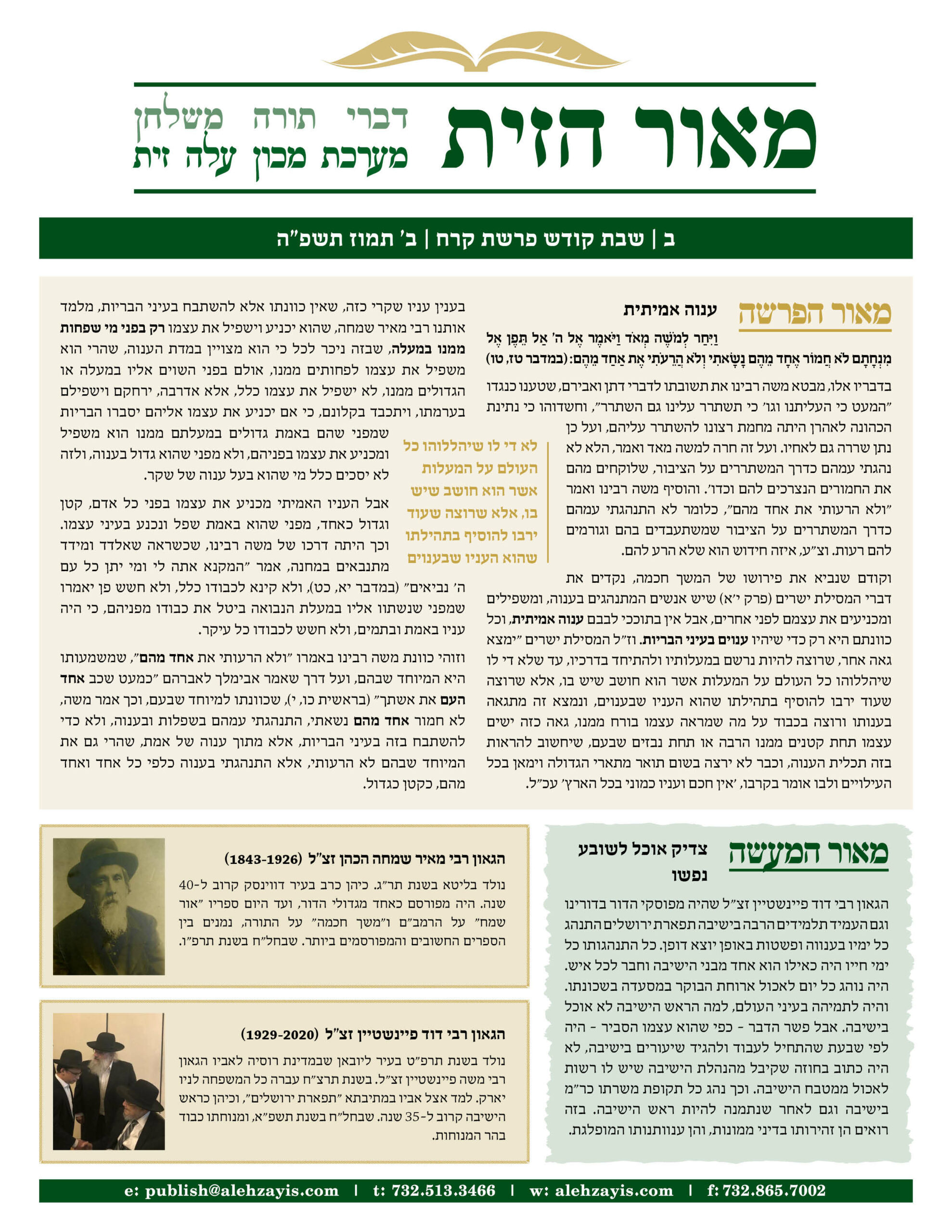
הגאון רבי מאיר שמחה הכהן זצ”ל (1843-1926)
נולד בליטא בשנת תר”ג. כיהן כרב בעיר דווינסק קרוב ל-40 שנה. היה מפורסם כאחד מגדולי הדור, ועד היום ספריו “אור שמח” על הרמב”ם ו”משך חכמה” על התורה, נמנים בין הספרים החשובים והמפורסמים ביותר. שבחל”ח בשנת תרפ”ו.
הגאון רבי דוד פיינשטיין זצ”ל (1929-2020)
נולד בשנת תרפ”ט בעיר ליובאן שבמדינת רוסיה לאביו הגאון רבי משה פיינשטיין זצ”ל. בשנת תרצ”ח עברה כל המשפחה לניו יארק. למד אצל אביו במתיבתא “תפארת ירושלים”, וכיהן כראש הישיבה קרוב ל-35 שנה. שבחל”ח בשנת תשפ”א, ומנוחתו כבוד בהר המנוחות.
מאור הפרשה
Principle of the Matter
Korach is severely punished for complaining to Moshe Rabbeinu. Yet he was not the first nor the last to complain. And while he got punished, others suffered no such repercussion—on the contrary they were even praised for raising valid points with Moshe Rabbeinu.
In Parshas Beha’aloscha, those who were tamei l’nefesh complained to Moshe and Aharon, “Why should we lose out and not bring the Korban Pesach?” Moshe promptly brought their complaint to Hashem, and their request was granted— Pesach Sheini was introduced.
Later, in Parshas Pinchas, the Bnos Tzlafchad also had a complaint: Eretz Yisrael was divided and given to male heirs. However, Tzlafchad ben Cheifer died without leaving any male descendants, so his daughters argued: “Why should our father lose out and not have any inheritance in Eretz Yisrael?” Then again, Moshe brought their argument before Hashem, and Hashem granted the daughters of Tzlafchad a portion in Eretz Yisrael.
When Korach complained, why didn’t Moshe take his complaint to Hashem? Why did he take it as a declaration of war?
Perhaps there is a fundamental difference between these complaints. In Parshas Beha’aloscha, they addressed the issue—not their perceived opponent. A legitimate complaint about the issue is deserving of עמדו ואשמעה מה יצוה ה’ לכם.
When Bnos Tzlafchad complained, they made sure to distance themselves from Korach and his men. As they spoke they made sure to add that their father was not among those people who fought against Hashem when Korach did.
Korach should have registered a fair complaint and said “למה נגרע, I too have a lot to offer in the service of Hashem, I want to serve Hashem on a higher level.” Perhaps then, the response would have been עמדו ואשמעה מה יצוה ה’ לכם.” Korach may have had a good claim, but he squandered it by resorting to personal attacks instead of sticking to the issue.
He accused Moshe and Aharon by saying, “Why do you hold yourselves greater than everyone else?” To that the just response is “וישמע משה ויפל על פניו.”
The Arizal says that לעתיד לבוא, after Korach gets a tikkun, “צדיק כתמר יפרח” – the last letters spell קרח, because he will be the Kohen Gadol. Korach did have the potential. But because he said מדוע תתנשאו rather than למה נגרע, his request was not granted.
מאור השלום
Leading With Humility
During the time that Moreinu Rav Shneur Kotler Zatzal served as the Rosh Yeshiva of Bais Medrash Govoha a talmid was about to get married, and he requested the honor of having Rav Shneur be mesader kiddushin at his chasuna. The Rosh Yeshivah acquiesced. Then the talmid asked that the Rosh Yeshivah should not give up the task to anyone else. Intrigued, the Rosh Yeshivah demanded the full story. The talmid then admitted that his future shver was going to ask the Rosh Yeshivah to step aside so that his brother-in-law, an insignificant “rabbi” with questionable hashkafos, could be mesader kiddushin. Realizing that shalom bayis was at stake, the Rosh Yeshivah told the talmid to allow his uncle to be mesader, and he, the Rosh Yeshivah would attend the chupah and oversee the proceedings. The talmid now had the security of knowing that it was all under real rabbinical supervision—and shalom bayis was maintained.
Despite his legendary humility, when kavod shamayim was at stake, Rav Shneur asserted himself with utmost severity. When an upstart acted immodest in public, Rav Shneur rebuked him at first. When this insolent young man responded that he was no longer in Yeshivah, insinuating that the Rosh Yeshivah held no sway over him, Rav Shneur told him that he would drive him out of town, and he was true to his word.
Moreinu Rav Shneur Kotler Zatzal
Born in 1918 in Slutzk, Russia to Moreinu Harav Aharon and Rebbetzin Chana Perel, daughter of Hagaon Harav Isser Zalman Meltzer. From 1962 through 1982 he led Beis Medrash Govoha in Lakewood and oversaw its rapid expansion. He was niftar on the third day of Tammuz, 1982 and is buried on Har Hamenuchos.
In Honor Of Rav Shneur’s Yahrtzeit – Gimmel Tamuz: Readers of Me’or Hazayis can submit stories about the Rosh Yeshivah, Rav Shneur zt”l, for publication in upcoming editions. Submissions should include all relevant details, as well as the submitters name and contact information. Please indicate which details should be omitted. Your request will be honored. However, all details should initially be provided for editorial review. The editorial team will carefully review each submission and edit as necessary for brevity and propriety.