No products in the cart.
Continue
Meor Hazayis Pinchas 5785
מאור הקנאה
גואל הדם
לכן אמור הנני נותן לו את בריתי שלום
(כה, יב).
בהמשך הפסוקים מבואר, ששכר זה, של נתינת “ברית שלום” מאת הקב”ה, ניתן לפינחס תחת אשר קינא לאלוקיו והרג את זמרי בעוון שבעל ארמית, ויכפר על בני ישראל.
והדבר צריך ביאור, כי ידוע שהנהגתו של הקב”ה היא במידה כנגד מידה (סנהדרין צ, א), ואם כן מדוע זכה פינחס לשכר של “ברית שלום” דוקא, הלא לכאורה לא מצינו במעשיו ענין של שלום דוקא, ואדרבה, בפשוטו נראה שהיה במעשיו היפך השלום, שהרי הרג נשיא מישראל, ופעולתו עוררה את רוגזם של השבטים עליו [כדברי רש”י בריש הפרשה]. ואף שעל ידי זה הציל את בני ישראל ממגיפה, אין זה שייך למעלת השלום דוקא.
הגאון הקדוש האבני נזר מסאכטשוב זצ”ל מבאר בזה ביאור נפלא (מובא בספר נאות הדשא ח”א), אשר ממנו נלמד קנאות אמיתית מה היא. כי הנה צריך להבין מהו יסוד הדין שהבועל ארמית קנאים פוגעים בו (סנהדרין פא, ב), ומשמע מזה שהבועל ארמית אינו חייב מיתה מצד הדין, ואם כן מאיזה טעם הותר לקנאים להרגו.
ומבאר האבני נזר, שהבועל ארמית אינו חוטא רק לעצמו, בינו לבין קונו, אלא הוא פוגם ומזיק בכך את כל ישראל, לפי שכלל ישראל כולו הוא כגוף אחד, וכאשר איש מבני ישראל בועל ארמית ומחבר את עצמו לטומאת הגויים, הרי הוא משפיע טומאה זו על כל ישראל ופוגם את כולם, ובנוסף לזה, על ידי זה הוא מפריד את החיבור של כלל ישראל זה לזה, שעל ידי שנדבקה בהם טומאת הגויים, הם נפרדים זה מזה ואינם כגוף אחד.
והנה מצינו בכל הורג נפש בשגגה, שאף על פי שאינו חייב מיתה, אלא דינו לגלות לעיר מקלט, מכל מקום גואל הדם – קרובו של הנהרג – רשאי להורגו, וטעם הדבר מפורש בתורה (דברים יט, ו) “כי יחם לבבו”. וכן הוא הדבר גם בבועל ארמית, שאף על פי שאינו חייב מיתה מצד הדין, מכל מקום מי שלבבו מתעורר באותה שעה לקנאות קנאת ה’ צבקות, אות הוא כי הרגיש בנפשו את גודל הפגם והפירוד שגרם חטא זה לכלל ישראל, ומתוך קירבה לנחלת ישראל יחם לבבו בקרבו, ורוצה להרוג את החוטא כדי לתקן את הפגם, להסיר בכך את טומאת הגויים מעל בני ישראל ולהחזירם לאחדותם. ועל כן הוא רשאי להרגו, כדין גואל הדם.
ועל פי זה יובן היטב מדוע היה שכרו של פינחס “ברית שלום” דוקא, מפני שעל ידי שהרג פינחס את זמרי וכזבי מתוך קנאת ה’ צבקות, נתקן הפגם שנעשה על ידי חטאם, והוסרה טומאת וזוהמת הגויים שנדבקה בבני ישראל, וממילא חזרו כלל ישראל להיות מאוחדים ומחוברים זה לזה כגוף אחד, והושכן שלום ביניהם. ועל כן, במידה כנגד מידה, זכה פינחס ל”ברית שלום”.
מאור המעשה
בוגד!
הגאון רבי נח וינברג זצ”ל, ראש ישיבת “אש התורה” בירושלים, היה תלמיד חכם נודע, והיה מפורסם ביותר בהיותו מקרב רחוקים. ישיבתו היתה כאבן שואבת לבעלי תשובה רבים אשר ביקשו לנפשם מקום שיעמידם בקרן אורה. עבור החזקת הישיבה והספקת כל צרכי התלמידים היה צורך לנסוע לבתי נדיבי עם ולאסוף את תרומותיהם. פעם אחת, בעת שנסע לצורך איסוף התרומות, נפגש רבי נח עם עשיר אחד, אשר אף שלא היה שומר תורה ומצוות, מכל מקום היתה תקוה גדולה שעשיר זה ינדב סכום מכובד עבור החזקת הישיבה. השנים נסעו יחדיו ברכב ושוחחו אודות ענינים שונים. תוך כדי שיחתם עברו לשוחח אודות נישואי תערובת, ורבי נח ביטא את גודל צערו על כך שיהודים רבים נכשלו בזה, ותיאר את גודל האסון שבדבר. העשיר הגיב, “מה כל כך נורא בנשואי תערובת, גם אני נשוי לאשה שאיננה יהודיה”. רבי נח לא שת לבו לגודל הסכום שקיווה לקבל מידיו של עשיר זה, וזעק מיד כנשוך נחש, “בוגד!”.
כי נושא זה נגע לרבי נח בנפשו, כגואל הדם היה הוא אצל ענין זה, ועל כן לא חישב חשבונות, אלא זעק ממעמקי לבו על הבגידה שבדבר.
(Rav Noach Weinberg; Torah Revolutionary)
הגאון רבי אברהם בורנשטיין זצ”ל מסאכטשוב (1838-1910)
נולד בפולין בשנת תקצ”ט לאביו הג”ר זאב נחום זצ”ל מחבר ספר “אגודת אזוב”. היה חתן האדמו”ר רבי מנחם מענדל מקוצק זצ”ל, והחשיבו כרבו המובהק. כיהן כרב בכמה עיירות, ובשנת תרמ”ג עבר לכהן כרב ואדמו”ר בעיר סאכטשוב. בעיר זו אף הקים ישיבה והעמיד בה תלמידים רבים, ביניהם בעל כלי חמדה. חיבר את הספר “אגלי טל” על מלאכות שבת, ואת הספרים “אבני נזר”, שו”ת על ד’ חלקי שו”ע. נפטר בשנת תר”ע ונקבר בסאכטשוב.
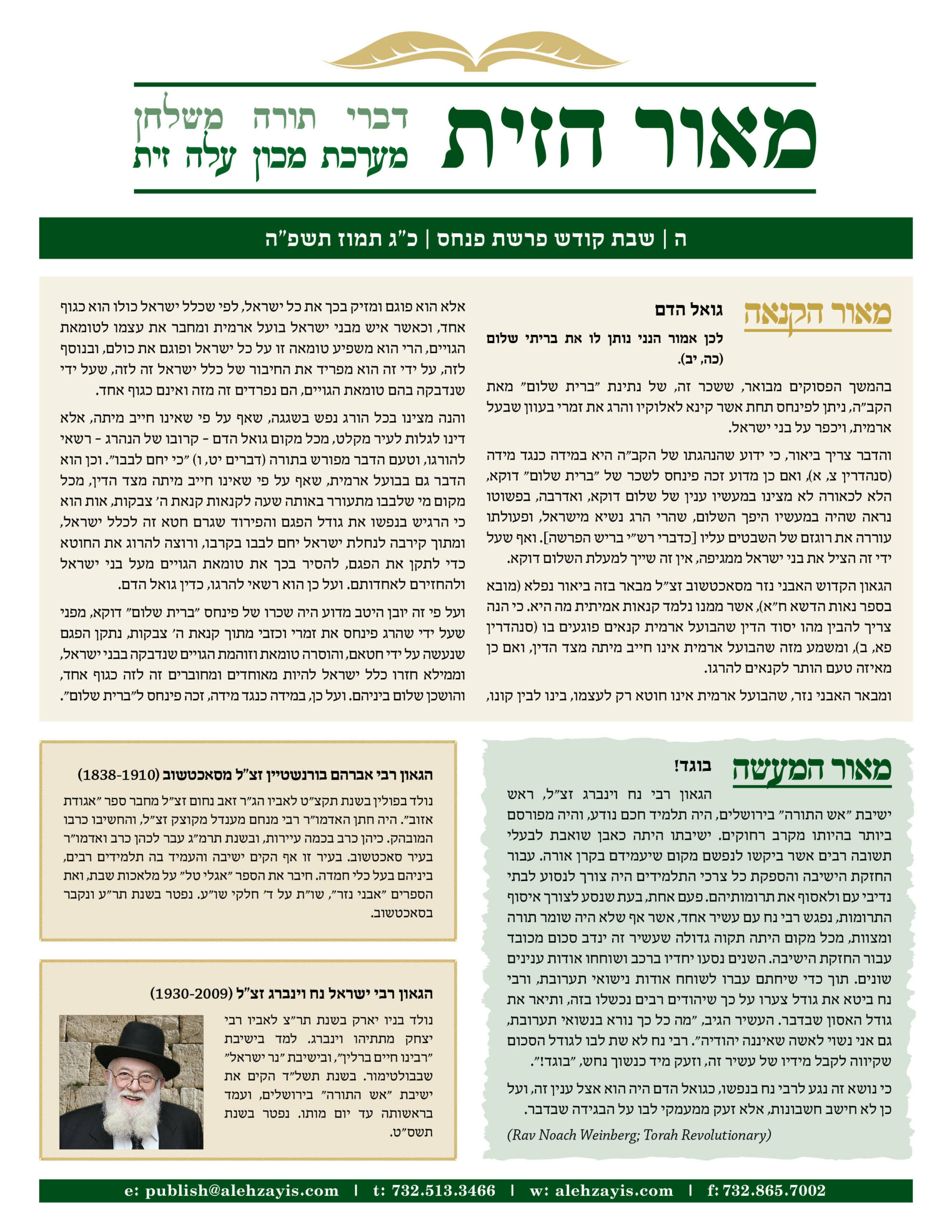
הגאון רבי ישראל נח וינברג זצ”ל (1930-2009)
נולד בניו יארק בשנת תר”צ לאביו רבי יצחק מתתיהו וינברג. למד בישיבת “רבינו חיים ברלין”, ובישיבת “נר ישראל” שבבולטימור. בשנת תשל”ד הקים את ישיבת “אש התורה” בירושלים, ועמד בראשותה עד יום מותו. נפטר בשנת תשס”ט.
מאור הפרשה
Split Personality
The Pasuk says: ותפתח הארץ את פיה ותבלע אתם ואת קרח במות העדה באכל האש את חמשים ומאתים איש ויהיו לנס.
Although the plain meaning of the pasuk implies that Korach was swallowed up, Rav Yochanon (Sanhedrin 110a) maintains that Korach was neither swallowed up by the ground, nor burned together with the 250 men who offered the ketores – he simply perished in the mageifa. According to Rav Yochanan, the words “ואת קרח” need to be read together with the words “במות העדה,” meaning that he died along with those who succumbed in the mageifa.
But according to a beraisa cited in the Gemara, Korach was both burned with the 250 men and swallowed up by the ground. Why did Korach receive these two unique punishments?
A good look at the story of Korach reveals two overlapping plots. There were the 250 men who aspired to serve Hashem on level with Aharon Hakohen. They were driven by an uncontrolled thirst for ruchniyos, a mishandled passion. They were consumed by the fire.
There were also Dasan and Aviram, driven by greed for money and power. The earth miraculously opened its mouth and swallowed them up.
Korach straddled both camps.
He was from the nosei ha’aron who cleaved to Torah and kedushah with his soul firmly planted in Machaneh Leviyah, near the Shechinah.
But Korach had another side to himself as well. The Ibn Ezra (16:24) says that in addition to Korach’s tent in Machaneh Leviya, he also had tents for his wealth far from there. His sprawling apparatus of men and belongings was kept in close proximity to Dasan and Aviram.
The punishments indeed fit the crimes.
For his misplaced striving in ruchniyos, his soul was burned along with the 250 other men who shared his passion for ruchniyos, misguided as it was. They needed to be punished, but their offering still became part of the mizbeyach. The unbridled fire in their soul consumed them.
For his greediness and appetite for earthly gains, the earth opened its mouth and devoured him. While his neshamah went up in holy fire, his earthly body descended to the depths of the earth.
Rashi (Sanhedrin ibid.) succinctly says it all:
שנשרפה נשמתו וגוף קיים, ואחר כך נתגלגל עד מקום הבלועין ונבלע.
His neshamah was burned [with the 250 men] but his body remained intact, and it made its way into the ground.
מאור שי”ח
Reaching Across Yeshivos
In 1980, Rav Shlomo Zalman Friedman, currently rav of Kehal Zichron Elazar – Santov, was learning at Yeshivas Be’er Shmuel. He wanted to visit Lakewood to experience it’s atmosphere. Turning thought into action, Shlomo Zalman traveled to Lakewood to spend Shabbos at the yeshiva, participating in all the Shabbos seudos.
On Motzei Shabbos, as he sat learning in the yeshiva’s beis medrash, he felt someone’s eyes on him. Raising his head, he was astonished to find none other than the Rosh Yeshiva himself, HaGaon Rav Shneur Kotler zt”l, standing and observing him! He immediately rose out of respect. The Rosh Yeshiva warmly extended his hand, greeted him with a hearty “Shalom Aleichem!” and proceeded to ask his name, where he studied, and what masechta he was learning in his yeshiva. He then engaged the young bachur in a brief Torah discussion before warmly taking his leave.
The next morning, as soon as Shlomo Zalman returned to his yeshiva, the Rosh Yeshiva, HaGaon Rav Yekusiel Bittersfeld zt”l, approached and greeted him, exclaiming with a smile, “Ah! Our visitor from Lakewood!” Shlomo Zalman was astonished—how could Rav Bittersfeld possibly know about his visit? He had returned late the previous night and hadn’t told anyone about his trip. Rav Bittersfeld explained: “Last night, I received a phone call from the Rosh Yeshiva of Lakewood, Rav Shneur Kotler, who called specifically to convey regards from ‘our talmid’ who spent Shabbos in Lakewood and with whom he enjoyed speaking in learning…”
Rabbi Yaakov Applegrad joined Beis Medrash Govoha in Elul 5735. At the time, the yeshiva boasted a skeletal bureaucracy. The standard procedure was that a bachur would arrive and begin learning, and a week or two into the zeman he would be invited to “speak in learning” with the Rosh Yeshiva. About two weeks after Yaakov’s arrival, the Mashgiach, Rav Yehudah Jacobs zt”l, suggested that he go in to the Rosh Yeshiva, Rav Shneur Kotler zt”l. Yaakov dutifully went to the Rosh Yeshiva and announced that he came “tzu redden in lernen.”
To his surprise, Rav Shneur responded “Why do we need to talk in learning? Didn’t we already do that?”
Rav Shneur reminded him of an incident that took place three years earlier. Yaakov had been learning at Torah Vodaas, and Rav Shneur was scheduled to visit the yeshiva as part of the ARTS program. Rav Shneur had been traveling out of town and was due to arrive late at night, staying overnight in a hotel near JFK Airport. Rav Gedalia Schorr zt”l had tasked Yaakov with picking up the Rosh Yeshiva at 6:30 AM the following morning.
Eager to make the most of this special opportunity, Yaakov had prepared a shtickel Torah to share with Rav Shneur during their early morning ride. Although the trip took place amid a stormy downpour, the adverse weather didn’t distract Rav Shneur from listening attentively. Now, three years later, the Rosh Yeshiva effortlessly recited back to Yaakov that same shtickel Torah!