No products in the cart.
Continue
Meor Hazayis Terumah 5786
מאור הצדקה
נקיות הצדקה ומעלתה
דבר אל בני ישראל ויקחו לי תרומה מאת כל איש אשר ידבנו לבו תקחו את תרומתי (כה, א).
יש להבין, מפני מה הקדים הקב”ה לצוות את ישראל בכל הדינים שבפרשת משפטים, ורק לאחר מכן ציוום על נדבת המשכן ועשייתו, לכאורה מן הראוי היה להקדים את ענין המשכן, שהוא דבר נשגב ביותר, שעל ידו זוכים להשראת השכינה בישראל, ואחר כך ליתן לבני ישראל דינים ומשפטים. וביותר יקשה הדבר לפי מה שביאר הרמב”ן בראש הפרשה, שתכלית ענין המשכן הוא שיהיה להקב”ה בית מקודש לשמו ששם ידבר עם משה ויצוה את בני ישראל, והכבוד ששכן על הר סיני יהיה שוכן בו תמיד בסתר, ונמצא אם כן שהשראת השכינה שבמשכן היא ממש המשך למתן תורה ומעמד הר סיני, ומן הראוי היה לצוות על כך מיד לאחר מתן תורה, קודם לדיני המשפטים.
אמנם ביאור הענין הוא כמו שביאר בבית הלוי, שבטרם יצוו את בני ישראל לתרום את תרומת המשכן, מן ההכרח לצוותם בכל דיני המשפטים, כדי שלא יהיה בממון שמנדבים כל חשש גזל, כי קודם שיעשה האדם צדקה בממונו צריך לראות שלא יהיה בו חשש גזל, שאם לא כן אין הצדקה מועלת לו כלל, וכשם שלולב הגזול פסול [אף בשאר הימים] משום מצוה הבאה בעבירה (סוכה לא, א).
ובזה ביאר את הכתוב (ישעיה נט, יד) “והוסג אחור משפט, וצדקה מרחוק תעמוד”, שמאחר שהוסג המשפט לאחור, וחדלו מלקיימו כראוי, על כן גם הצדקה שעושים עומדת מרחוק, ואינה מועילה כלל. וכן ביאר בזה את מאמר הכתוב (שם נו, א) “כה אמר ה’ שמרו משפט ועשו צדקה כי קרובה ישועתי לבא”, שאם תקדימו את שמירת המשפט לעשיית הצדקה, אז תהיה הצדקה כראוי וכהוגן, ותעלה לרצון לפני אדון כל, וממילא תקרב את ישועת ה’.
* * *
על לשון הכתוב “ויקחו לי תרומה” העירו המפרשים שהוא תמוה, כי הלא את התרומה נותנים להקב”ה ולא לוקחים, והיה לו לומר “ויתנו לי תרומה”. וביאר בזה הבית הלוי, שבאמת התרומה שנותנים להקב”ה לקיחה היא, כי עיקר מה שיש לו לאדם בממונו הוא מה שנותן לצדקה, אבל שאר הממון אינו נחשב כשלו, אלא מתנת הקב”ה היא שהאדם יכול להשתמש בה לצרכו. והרי זה דומה לחתיכה גדולה של סוכר המונחת בארגז סגור, וזבוב אחד הנמצא בתוך הארגז הולך על חתיכת הסוכר וגם אוכל ממנה כפי שירצה, שפשוט לכל כי אין כאן בעלות של הזבוב על הסוכר, אלא שיש בידו האפשרות להשתמש וליהנות ממנו כרצונו, וכך ממש היא העשירות לגבי האדם, שהיא רק מונחת אצלו אבל איננה שלו, ורק מה שנותן לצדקה הוא שלו ממש. וכמו שאמרו בגמרא (בבא בתרא יא, א) שמונבז המלך בזבז אוצרותיו ואצרות אבותיו לצדקה בשני בצורת, ואמר, אבותי גנזו לאחרים ואני גנזתי לעצמי.
מאור הממון
רכושו של אדם
רבינו דון יצחק אברבנאל זצ”ל היה שר האוצר במלכות ספרד, ועקב מעמדו רכש לו שונאים רבים מקרב אנשי החצר של המלך. שונאיו העלילו עליו שהוא מרבה את עשרו מכספי המלך ועושק את אוצרות הממלכה, ויעצו למלך לדרוש ממנו את רשימת כל נכסיו, וכך יוכל לברר ולעמוד על מקור כל רכושו. המלך עשה כדברי יועציו, וביקש מהשר היהודי להגיש בפניו רשימה המפרטת את כל נכסיו ורכושו. השר נענה לעומתו, כי דרושים לו כמה ימים לשם כך, ובסופם יגיש למלך את מבוקשו. לאחר ימים מספר הגיש השר למלך את הרשימה, ובה כמה עשרות אלפי דוקאטים. כראות המלך את הרשימה, זעק ואמר, “כעת יודע אני שאמת בפי יועציי! הלא סך המתנות שאני עצמי הענקתי לך עולה על הסכום כמה מונים! הריני מחרים בזאת את כל רכושך, עד שתיערך בו בדיקה מקיפה”. ענה לו רבינו האברבנאל ואמר, “הרי אדוני המלך לא ביקש לדעת מהו סכום הכסף ושווי הנכסים שבידי, אלא מהו הרכוש שלי. ואכן, הסכום שכתבתי ברשימה הוא הוא הרכוש האמיתי שלי, שכן אלו הם הסכומים שחלקתי לצדקה ולהחזקת תורה. הם נרשמו לזכותי, ואיש לא יוכל ליטלם ממני. אבל שאר הממון שבידי אינו שלי כלל, מופקד הוא בידי אבל אני עלול לאבדו בכל עת. וכמו שאכן נוכחנו עתה לראות שהמלך החרימו…”.
(והגדת)
רבינו דון יצחק אברבנאל זצ”ל (1437-1508)
נולד בשנת קצ”ז בליסבון שבפורטוגל לאביו דון יהודה שכיהן כשר האוצר במלכות פורטוגל. למד תורה אצל הגאונים רבי יצחק אבוהב זצ”ל, רבי יוסף חיון זצ”ל ורבי יוסף אבן שם טוב זצ”ל. התאחדו על שולחנו תורה וגדולה, וביתו היה בית ועד לחכמים. בהמשך אף מונה לכהן כשר האוצר והיה מקורב למלכות. בשנת רנ”ג, עקב עלילה שהעלילו עליו השרים, בקש המלך את נפשו, והוא נאלץ לברוח לספרד. גם שם היה מקורב למלכות ופעל לטובת אחיו. בשנת רנ”ב גורשו יהודי ספרד והוא גלה לאיטליה, שם שימש כיועץ למלך וסייע רבות לאחיו הגולים. הותיר אחריו ספרים רבים, ביניהם: פירוש לתנ”ך, להגדה של פסח, לפרקי אבות ועוד, וכן חיבורים על יסודות הדת והאמונה. נפטר בשנת רס”ט [או רס”ח. ויש הטוענים שנפטר לאחר שנת רפ”ב.] ונטמן בפאדובה שבאיטליה.
מאור הצירוף
Chesed is the Linchpin
Yaakov Avinu had a hand in the building of the Mishkan in two ways. The boards of the Mishkan (kerashim) were made of atzei shittim, acacia wood, which Yaakov brought along and replanted when he descended to Mitzrayim (Rashi 26:15 in the name of Tanchuma). The briach hatichon, the middle bar that penetrated the walls of the Mishkan and connected all the kerashim was made from Yaakov’s staff (Daas Zekeinim miBaalei Tosafos 25:5 in the name of the Midrash).
The Gemara (Yoma 75b) states that peddlers in the vicinity of Bnei Yisrael’s encampment sold them various items. Why did the wood have to be brought from Eretz Canaan to Mitzrayim by Yaakov and then to the midbar by his descendants? Couldn’t Bnei Yisrael have purchased cedar wood from passing merchants?
The kerashim could not be placed horizontally or upside down; they had to be erected vertically, in the direction they had grown. The Imrei Emes of Gur explains that if Bnei Yisrael would have bought the wood from peddlers, they would not have known in which direction it had grown. The trees had to be homegrown by Yaakov Avinu so that Bnei Yisrael could keep track of their growth.
The boards of the Mishkan were marked with letters to indicate the proper spot for each board, since the kerashim were always required to stand at the same location. A board from the northern side of the Mishkan could not be placed on the southern side, and vice versa (Maseches Shabbos).
The halachos of the kerashim make it clear that no flexibility was allowed with regard to the atzei shittim. Atzei shittim itself is an inflexible material.
The Gemara (Taanis 20a) contrasts the curse of Achiyah Hashiloni with the blessing of Bilam. Achiyah cursed Bnei Yisrael that they should sway as a reed — hardly flattering. Yet the reed bends with the wind and, once it passes, stands upright again. Bilam, by contrast, blessed them that they should be like a Erez tree — outwardly a compliment, for no ordinary wind can make it budge. But Chazal note that the Erez’s very rigidity is its undoing: when a sufficiently powerful gust comes, it does not bend. It cracks. Yeshayahu (41:19) identifies the inflexible erez with shitah wood. In contrast, the briach hatichon was the most flexible piece of wood in history. It was able to twist and turn along with the bends of the Mishkan. The rod was inserted in one side, and it extended until the opposite end, running through the northern, western, and southern sides of the Mishkan and bending at every corner. Although it was made of the same shitah wood, it was positioned horizontally.
Yaakov Avinu had two names: יעקב, whose root is “עקב—twist,” and ישראל, derived from “ישר—straight.”
Yaakov embodied the fusion of these two middos. On one hand, he personified middas hachessed, allowing flexibility and bending for another. This middah was represented by his staff, as it says, “Katonti m’kol hachassadim… ki b’makli avarti es haYarden hazeh,” (Bereishis 32:11).
Yaakov also represents yashrus, uprightness, as seen from his name Yisrael.
According to Targum Yonasan (26:28), the briach hatichon was made of the eshel planted by Avraham. The eshel was symbolic of Avraham, the epitome of chessed.
Avraham was the pillar of chessed; Yitzchak was the pillar of avodah and gevurah. The Mishkan was based primarily on the middah of gevurah, the amud ha’avodah of Yitzchak, represented by the rigid atzei shittim. Still, it was held together by the briach hatichon, the middas hachessed.
מאור שי”ח
Rav Shneur’s Innocence
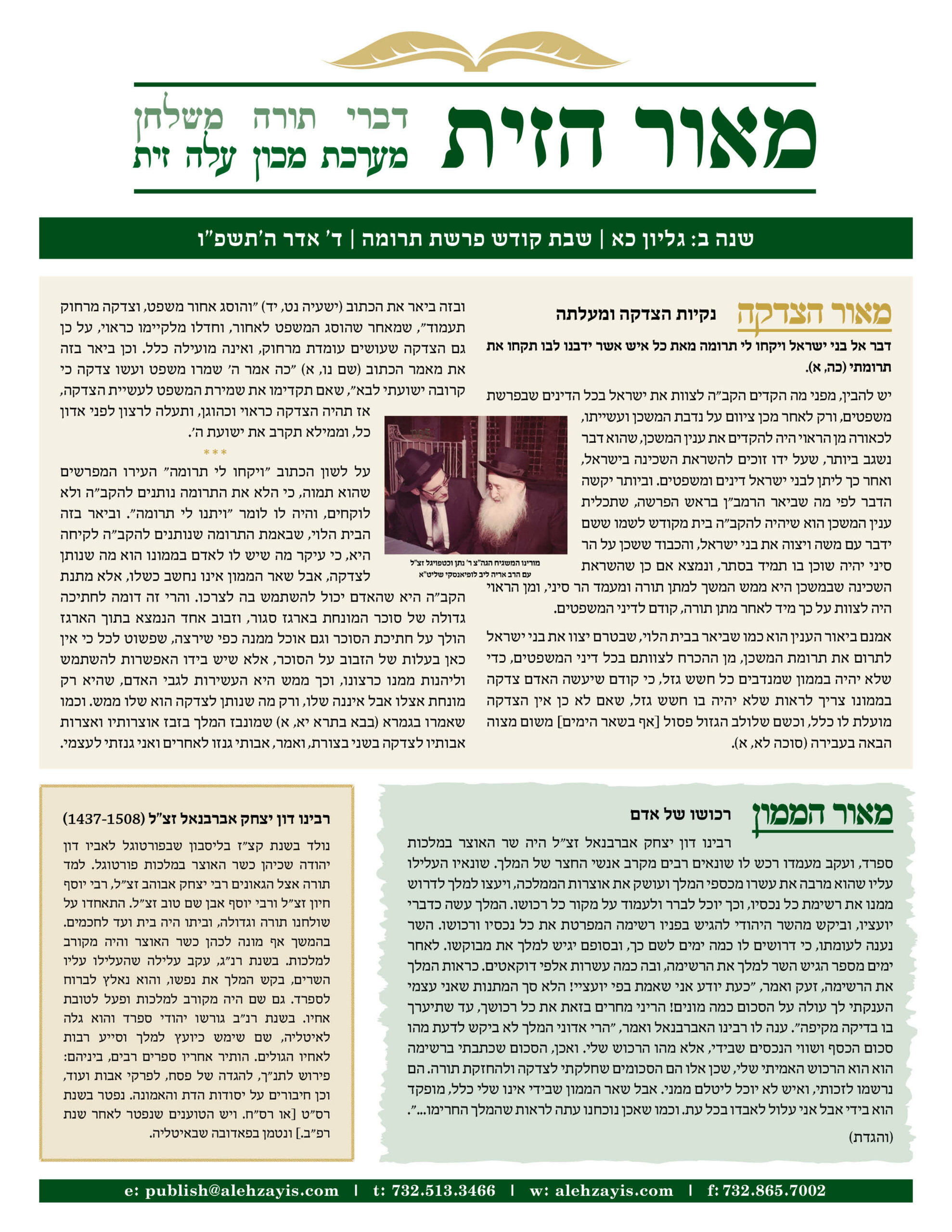
As a bachur learning in Beth Medrash Govoha, Rabbi Aryeh Lopiansky once rode in a car together with the rosh yeshivah, Rav Shneur Kotler zt”l, who sat next to the driver, and the mashgiach, Rav Nosson Wachtfogel zt”l, who sat in the back with him.
During the conversation between Rav Shneur and Rav Nosson, the name of Rav Yosef Begun hy”d came up. Rav Begun was the author of Yalkut Yedios Ha’emes and was a communal activist in pre–War Europe. Rav Nosson mentioned that while studying in the Mirrer Yeshiva, Rav Begun had established a “locker” system for the benefit of the talmidim. In this locker, bachurim could purchase items such as shoelaces and buttons and leave the payment in a box inside. Eventually, however, the locker was found to be losing money and was shut down.
Upon hearing this, Rav Shneur remarked that he could not understand why the locker was losing money. Rav Nosson did not respond; instead, he turned his face toward Rabbi Lopiansky. Rabbi Lopiansky noticed that he was blushing slightly, with a faint smile and a twinkle in his eye.
His message was clear: “You and I know why the locker was losing money. Among the hundreds of talmidim in the illustrious Mirrer Yeshivah, some—subject to human frailty—did not live up to what was expected of them and failed to deposit what they owed. Rav Shneur is such an eidele Yid, with such profound respect for people and especially for bnei Torah, that he cannot fathom that someone would not pay. That is why he is baffled.”
Heard from Harav Aryeh Leib Lopiansky