No products in the cart.
Continue
Meor Hazayis Vayikra 5786
מאור הברכה
להכיר כי הכל מהקב”ה
אדם כי יקריב מכם קרבן לה’ וגו’ תקריבו את קרבנכם, ויש לתמוה דמתחיל בלשון יחיד ‘אדם כי יקריב מכם קרבן’ ומסיים בלשון רבים ‘תקריבו את קרבנכם’, וברש”י ובמדרש (ויק”ר פב סז) מה אדם הראשון לא הקריב מן הגזל אף אתם לא תקריבו מן הגזל.
וביאר הקדושת יום טוב בהקדם דברי הגמ’ (ברכות לה.) רבי לוי רמי, כתיב לה’ הארץ ומלואה (תהלים כד א), וכתיב השמים שמים לה’ והארץ נתן לבני אדם (שם קטו טז), לא קשיא, כאן קודם ברכה כאן לאחר ברכה, אמר רבי חנינא בר פפא כל הנהנה מן העולם הזה בלא ברכה כאלו גוזל להקב”ה. והנה צריך האדם להיות מאמין בהקב”ה שהוא מזמין לו פרנסתו בכל עת שיצטרך, אם מעט אם הרבה, הכל מה שחננו יתברך, וחלילה שיעלה על הדעת לחשוב שיוכל להשיג זאת בחריצות שכלו או בתקפו וגבורתו, אך לאשר שמאת ה’ היתה זאת שצריך האדם לעסוק במשא ומתן ולעשות מקנה וקנין, כדכתיב (דברים טו יח) וברכך ה’ אלקיך בכל אשר תעשה, על כן זה פונה לפרקמטיא שלו וזה לאומנתו ולחרוש שדהו, אבל חלילה להחזיק טובה לעצמו לומר שכחי ועוצם ידי עשה את החיל הזה, כי לולא ה’ בעזרתו ח”ו, כל יגיעותיו וכל עמלו אשר יעמול תחת השמש יצא לריק ולבהלה.
הלא מעתה בין תבין בטוב טעם ודעת טעמא דברכות אשר נתקנו על כל דבר ודבר שהוא מתהנה ומתענג בו, והיא שבא להורות כי הוא מכיר ממשלתו יתברך על כל הדברים וכי הכל שלו, ולא בחכמתו והשתדלותו זכה לכך, וכאשר נצא ידי חובת הברכה הראויה, אזי ברכת ה’ היא תעשיר ונתנה לנו הארץ, ושלנו היא מקנת כספינו על ידי ברכותינו.
וזה ביאור הגמ’ הנ”ל כתיב לה’ הארץ ומלואה, וכתיב והארץ נתן לבני אדם, לא קשיא כאן קודם ברכה, דאם אינו שם על לבו להלל את ה’, על מה שנותן לו הנאת העולם, אינו קונה אותה ברכה ברכת השם על ידי ברכתו, אם כן הרי הוא לה’ והוא גוזל אותו ממנו, כדאמרינן כל הנהנה מהעולם הזה בלא ברכה כאלו גוזל להקב”ה, כי לא קנאו בדמי הברכה, מה שאין כן בברכך אותו ותתן לו שבח והודאה על מה שזכית לנחול את הארץ הטובה, יען שעל ידי הברכה זו הוא יתברך נותנה לך, כדברי המשורר והארץ נתן לבני אדם, ואם כן אשר הברכה שאנו מברכין על כל דבר, בא להורות כי הכל מאת ה’, ולהכחיש דעה הכוזבות אשר על ידי פעולת, ומעשי ידי אדם זכה לכך, ממילא באדם הראשון שנברא אחר כל מעשה בראשית ומצא עולם מוכן ומתוקן בכל טוב לפניו, בודאי גם קודם ברכה גלוי וידוע כי הכל שלו יתברך.
וזה פירש”י ז”ל מה אדם הראשון לא הקריב מן הגזל, כי באדם הראשון אף גזל של נהנה בלא ברכה לא שייך אצלו, אף אתם לא תקריבו מן הגזל, שתדעו כי לא תולדות ופעולה מעשה ידיכם הוא, כי אם הקב”ה הוא הנותן לכם, ומשם בארה ביאור הפסוק אדם כי יקריב מכם קרבן לה’, לה’ דייקא, שתדעו ששלו היא ולא פרי מעשה ידכם, אז תקריבו את ‘קרבנכם’, היינו שיהיה הקרבן שלכם ממש, כי על ידי נתינת שבח והודיה לה’ על שחנן אתכם, בזה יהיה הקרבן שלכם בקניית נתינת שבח והודיה.
מה’ מצעדי גבר בדברי ישראל מרמז, ויקרא באל”ף זעירא, והסמיכות עם סיום הפרשה של מעלה (שמות מ לח) לעיני בית ישראל לכל מסעיהם, כי כל המקרים שבעולם הכל הוא בהשגחה פרטית מן השמים, כנודע בשם צדיקים אפילו קש שהריח מפזרו ממקום למקום, הרוח סערה עושה דברו, והוא בהשגחה מן השמים שמקודם היה צריך להיות במקום זה ועכשיו במקום אחר, וכמו שאמר אדמו”ר רבי יחזקאל מקוזמיר זצוק”ל, שאפילו צעדי רגליו של אדם ספורים בהשגחה מן השמים, ואפילו עשרת אלפים צעדיו והלוכו של אדם, כל פסיעה ופסיעה ספורים בהשגחה פרטית מן השמים, כמו שמברכין בשם ומלכות המכין מצעדי גבר, ומי שאינו מאמין בזה נמצא מברך בכל יום ברכה לבטלה, ומכל שכן מצעדי גבר הנוסע מעיר לעיר, ומכל שכן עכשיו בחבלי משיח, אלה מסעי בני ישראל, שאנו רואים העולם רק נוסעים לכאן ולכאן ואין נוחים בביתם, נוסעים וחוזרים ונוסעים לבקש ולחפש פרנסה, אין זאת מקרה חלילה, רק בהשגחה פרטית מן השמים בזה לקרב את הגאולה.
וזהו שמרומז בסמיכת הפרשיות, לעיני בית ישראל לכל מסעיהם ויקרא באל”ף זעירא, ויקרא לשון מקרה, אל”ף היינו אלופו של עולם, זעירת האל”ף מורה על דבר קטן וזעיר, ר”ל שכל מה אשר יארע ויקר בעולם, הכל הוא מבחינת אל”ף בהשגחה פרטית מאלופו של עולם, אפילו דבר זעיר והפחות שבפחות, ומכל שכן מסעיהם של ישראל עכשיו בחבלי משיח שהם נעים ונדים לכאן ולכאן, שלמראה עיני בני אדם חושבים שהוא מדרך הטבע לצורך פרנסתם, אבל מי שעיני שכל לו רואה שהוא הכל מן השמים, זהו שנאמר לעיני בני ישראל, פי’ לעיני שכלו רואה בכל מסעיהם ויקרא כנ”ל, וכל זה הוא לטובת ישראל ולצורך הגאולה, וזהו שאמר בכל מסעיהם ויקרא לשון חבה כפירוש רש”י.
מאור הקרבן
B’levavi Mishkan Evneh
In the era of the Beis Hamikdash, we merited continued opportunity for kirvas Hashem. In fact, the root of the word korban is karov, to come close. But what is left for the galus Jew?
When the Ramban debated the nonbelievers they asked him a spiteful question: “Of what value is your service to your G-d? You no longer have your glorious Temple. You are missing the korbanos, the basic element of avodas Hashem!”
The Ramban’s response is so profound and uplifting.
“כְּשֶׁאַנִי עוֹבֵד אֶת בּוֹרְאִי בְּגָלוֹת — When I serve Hakadosh Baruch Hu in galus, without a Beis Hamikdash, without the korbanos,
בְּעִינוּי שִׁיבָּעוּד וְחֶרַפַּת הָעַמִים — against the backdrop of the oppression and the ridicule of the nations,
שְׂכָרִי מְרוּבָּה — I have even more s’char than from service in the Beis Hamikdash. Why?
אַנִי עוׁשֶׂה עוׁלָה לְאֶלֹקִים מֵגוּפִי — because I become a korban! I may not be able to bring a korban in the Beis Hamikdash, but I use my life as a korban olah l’Hakadosh Baruch Hu.”
In galus we don’t bring korbanos, but we can make ourselves into korbanos. More so, as the Rambam concludes וּבָּזֶה אֶזְכֶּה לְחַיֵי עוה”ב יוׁתֵר וְיוׁתֵר, my avodah is much more significant since טוׂב אֶחָד בְּצַעַר!
In the moving words of the Sefer Chareidim:
בִּלְבָבִי מִשְכָּן אֶבְנֶה — I will build a Mishkan in my heart,
וּלְקָרְבָּן אַקְרִיב לוׁ אֶת נַפְשִׁי — and I will sacrifice myself.
And that is really the most meaningful korban. We are accustomed to think that mesirus nefesh means giving up your life. That’s true, of course; giving one’s life is the ultimate mesirus nefesh. But in the beginning of Chayei Sarah on the pasuk (Bereishis 23:8), נַפְשְׁכֶם יֵשׁ אֶת אִם, Rashi says nafshechem means ratzonchem, your desires and wants. Mesirus nefesh, then, can also mean giving up your desires, your wants, and your inclinations. When a person is tempted to do something but he does not do it because it is wrong, that is mesirus nefesh — he has given up his ratzon. That is also עוֹלֶה לְאֶלוֹקִים מַגוּפִי !
A diamond merchant traveled to a jewelry fair, where he spotted the most beautiful diamond. The cost of the diamond was prohibitive, and he didn’t have enough money to buy it. But this was the very diamond that he needed; this stone would bring him a handsome, and much needed, profit. He stayed at the fair for the entire week, and toward the fair’s end, the diamond was still not sold.
He approached the seller.
“I’ll give you all the money I have, every last penny — I am only withholding the money that I need to travel home.” He put all of his money on the table.
“Not enough,” said the seller. “Do just a little better…”
The merchant saw that he had a chance. He took out the money that he was keeping for his travel expenses and put that on the table as well. It swung the balance.
“For that amount, the diamond is yours,” said the seller.
The merchant hesitated for just a moment. How would he get home? But he instantly decided that this was an offer that he could not give up. He bought the diamond. He had no choice but to walk home.
It was a freezing winter, and instead of several days in a coach, the journey home took many weeks. He endured the hardships of the road and slept at night in the shuls of the shtetlach that he passed through.
When he came home, his family couldn’t believe it. He had walked all the way home?
“How did you do it?” they cried. “How did you endure the constant exertion and weariness? And those freezing winter nights?”
“I had an instant source of chizuk,” he replied. “Whenever my experiences seemed too hard to bear, I would open up my pack and take a peek at the most beautiful diamond within. The sparkling gem gave me the strength to move on.”
That is the secret of living through galus. When it seems to be too difficult to bear, a Yid should stop for a moment and open up his “pack” to look at the diamonds that he is generating. He should look at the טוֹב אֶחָד בְּצַעַר מִמֵאָה בְּרֶיוַח, and have emunah in the טוֹב מְאֹד in what he is doing. He should remember אֵינָך יוֹדֵעַ אֵיזֶה יוּכְשָׁר. He should realize that in galus he can bring a korban that may be even greater than the korbanos in the Beis Hamikdash — ul’korban akriv lo es nafshi ha’yechida.
(Rabbi Zev Smith. Life’s Ladder. Machon Aleh Zayis)
מאור הפסוק
Your Sacrifice Alone
Rav Yehuda Davis Zatzal was one of the less-known influential personalities in building Mosdos Hatorah in the early years of Torah in America. American-born, he had nevertheless spent formative years as a bachur learning in Yeshivas Slobodka in pre-war Europe.
After returning to the United States, he found himself in need of a position and was weighing two possibilities. One was a post as an assistant rabbi in New York; the other was a position in Baltimore. While the New York offer came with a higher salary, Rav Davis was drawn to Baltimore. He believed his influence there would be greater, particularly among the youth.
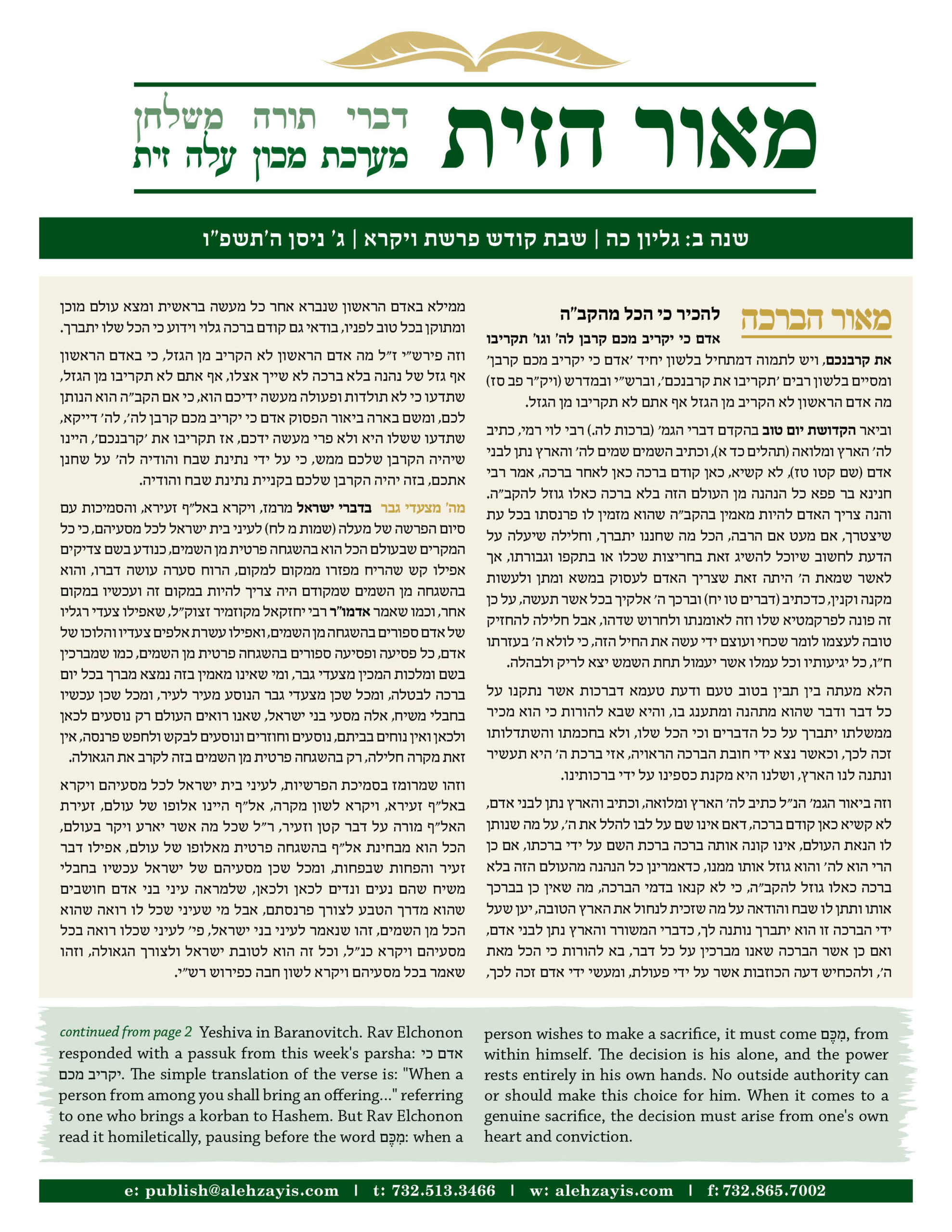
Unable to resolve the matter on his own, he turned to Rav Elchonon Wasserman, who was visiting America at the time on a fundraising mission for his Yeshiva in Baranovitch. Rav Elchonon responded with a passuk from this week’s parsha: אדם כי יקריב מכם. The simple translation of the verse is: “When a person from among you shall bring an offering…” referring to one who brings a korban to Hashem. But Rav Elchonon read it homiletically, pausing before the word מִכֶּם: when a person wishes to make a sacrifice, it must come מִכֶּם, from within himself. The decision is his alone, and the power rests entirely in his own hands. No outside authority can or should make this choice for him. When it comes to a genuine sacrifice, the decision must arise from one’s own heart and conviction.