No products in the cart.
Continue
Meor Hazayis Veschanan 5785
מאור היראה
יראת חטא ויראת העונש
את ה’ אלקיך תירא ואותו תעבוד ובשמו תשבע (ו, יג).
מצות יראת ה’ יש בה כמה מדרגות חלוקות זו מזו. ובזוה”ק (הקדמה יא, ב)אמרו שיש ג’ מדרגות במידת היראה. יש שיראתם היא יראת עונשי העולם הזה, שמקיימים את מצוות ה’ מתוך יראה שלא ימותו הם ובניהם, או שיענשו בגופם או בממונם. יש שיראתם היא יראת עונשי העולם הבא, שמקיימים את מצוות ה’ מתוך יראה שלא יענשו בעולם העליון ולא יסבלו מעונשי הגיהנם. ויש שיראתם היא יראת הרוממות, שיראים להמרות את עיני כבודו ולעבור על רצונו “בגין דאיהו רב ושליט, עיקרא ושרשא דכל עלמין, וכולא קמיה כלא חשיבין” [מפני שהוא גדול ושולט, עיקר ושורש כל העולמות, והכל אינם נחשבים לפניו ככלום].
ואמרו בזוה”ק שם, ששני אופני יראת העונש אינם עיקר מעלת היראה, ויראה זו מכונה יראה רעה, ודוקא יראת הרוממות, להתיירא מחמת הכרת גדלו וגבורתו של הקב”ה, היא עיקר היראה. אמנם כתבו בספרים הקדושים, שאל לו לאדם להתרפות מלהשיג יראת העונש, בראותו את מאמר הזוה”ק אודות פחיתותה של יראה זו, ומתוך שאיפה להשיג אך ורק יראת הרוממות, כי יש לחשוש שיראת העונש לא תהא בידו, ואל יראת הרוממות לא יעלה בידו להגיע, ונמצא קרח ומכאן ומכאן. אלא ראשית חכמה יש לו לאדם לעמול ולהשיג מדרגה זו של יראת העונש, ואחר שקנה מדרגה זו בנפשו כיתד בל תמוט, יש לו להביא את עצמו לידי יראת הרוממות.
והמגיד מפלאצק בספרו כתר תורה (מהדורת תרנ”ו לו, א) כתב משל נפלא בענין זה בשם רבו הגר”א זצ”ל. משל למה הדבר דומה, למלך שהביאו לפניו בשר בהמה שמן ומשובח לאכול, אולם רופא חכם יעץ לו להימנע מאכילת הבשר, מאחר שהבהמה הוכרחה באכילתה בחייה, ועל כן שומנה אינו בריא כל כך למאכל. המלך הקשיב לעצת הרופא, נמנע מלאכול את חתיכת הבשר והשליכה מארמונו. עבר שם שר אחד ומצא את הבשר המשובח מושלך מחוץ לארמון המלך, השר שש על המציאה ומיהר לקחתה לביתו. המלך, בראותו את השר לוקח את הבהמה לביתו כדי לאכלה, החל לצווח בקול מר, אוי לו לזה שיאכל בשר גרוע כל כך וסופו שימות בגללו. אמר לו הרופא, אדוני המלך, תדע נאמנה שלא יאכלנה השר היום, אלא ישמרנה ליום חגו, יען כי לא אכל מאכל כזה מימיו. כי רק בערכו של המלך אין הבשר הזה כדאי לאוכלו, וטוב לו למלך למצוא תחתיו בשר בהמה משובח יותר, אשר הבהמה לא אכלה מתוך הכרח, אבל לפי ערכם של הפחותים ממעלת המלך, ודאי בשר זה משובח עשרת מונים מכל בשר אחר שתשיג ידם.
וכן הוא הדבר בנמשל, כי מה שהשליך רשב”י בעל הזוה”ק מארמנותיו את יראת העונש ההכרחית, אינה אלא לפי רום וגודל מעלתו, שבידו לבוא בשלימות לידי יראת הרוממות המעולה יותר מיראת העונש, אבל אנשים כערכנו, הלואי שניטול את היראה שהשליך שתהיה לנו ליום חגינו. ולפי ערכנו, קנין מידת יראת העונש בשלימות לדבר גדול תיחשב.
מאור הפחד
והשבות אל לבבך
אירע פעם אצל רבינו הגר”א זצ”ל, שביום השבת הגישה לו הרבנית קטניות שהיו בקליפתם. הגר”א הפריד את הגרעינים מקליפתם, אכל את הגרעינים והותיר את הקליפות על השולחן. הקליפות היו אף הן ראויות לאכילה, בשל היותן לחות עדיין, אבל הגר”א היה סבור שהקליפות אינן ראויות לאכילה, ומוקצה הן, ועל כן כאשר אחר כך, תוך כדי שיחה או לימוד, אירע שנגע בקליפה שלא במתכוון, נזדעזע מיד בכל גופו, והתעלף מגודל יראתו מן החטא. כאשר העירו אותו מעלפונו ושוב נגלו הקליפות לנגד עיניו, שב הגר”א והתעלף.
רעייתו הצדקנית חשה במתרחש והתעשתה מיד. היא נטלה קצת מן הקליפות ואכלתן לפניו, על מנת להפיס את דעתו, בראותו שהן ראויות לאכילה ואינן מוקצה. ואכן, משנוכח לראות במו עיניו כי גם אלה ראויות לאכילה, שבה רוחו אליו ונתיישבה דעתו.
(הגאון ח”א עמ’ 215)
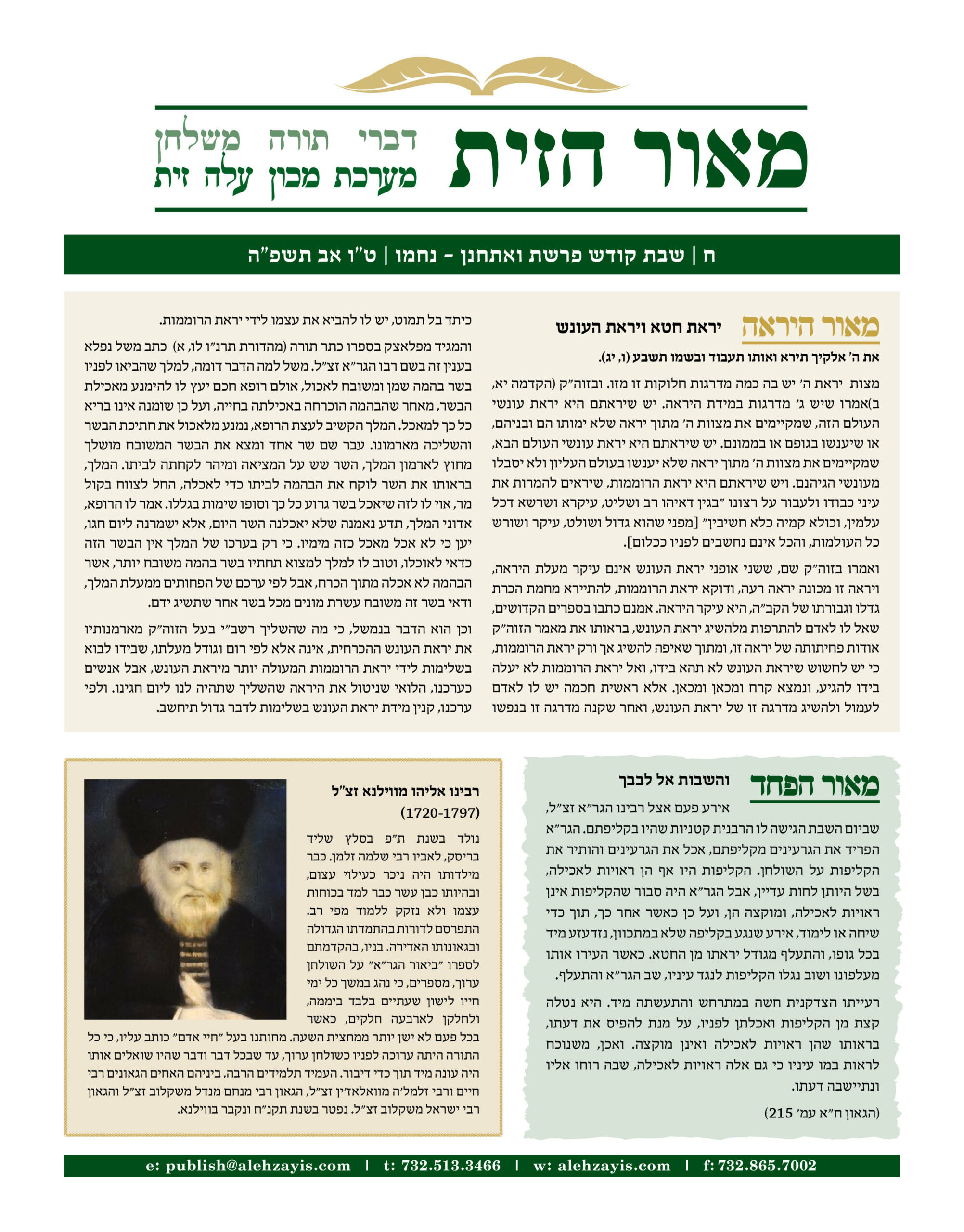
רבינו אליהו מווילנא זצ”ל (1720-1797)
נולד בשנת ת”פ בסלץ שליד בריסק, לאביו רבי שלמה זלמן. כבר מילדותו היה ניכר כעילוי עצום, ובהיותו כבן עשר כבר למד בכוחות עצמו ולא נזקק ללמוד מפי רב. התפרסם לדורות בהתמדתו הגדולה ובגאונותו האדירה. בניו, בהקדמתם לספרו “ביאור הגר”א” על השולחן ערוך, מספרים, כי נהג במשך כל ימי חייו לישון שעתיים בלבד ביממה, ולחלקן לארבעה חלקים, כאשר בכל פעם לא ישן יותר ממחצית השעה. מחותנו בעל “חיי אדם” כותב עליו, כי כל התורה היתה ערוכה לפניו כשולחן ערוך, עד שבכל דבר ודבר שהיו שואלים אותו היה עונה מיד תוך כדי דיבור. העמיד תלמידים הרבה, ביניהם האחים הגאונים רבי חיים ורבי זלמל’ה מוואלאז’ין זצ”ל, הגאון רבי מנחם מנדל משקלוב זצ”ל והגאון רבי ישראל משקלוב זצ”ל. נפטר בשנת תקנ”ח ונקבר בווילנא.
מאור הנחמה
Comfort My People
Rav Avreml Ausband zatzal was the revered Rosh Yeshivah of Telz Alumni Yeshivah of Riverdale. Just days before the Rosh Yeshiva’s petirah, Reb Sruly Borenstein encountered him at a chasunah and shared the following dvar Torah:
The Gemara (Bava Basra 14b) explains that the way Chazal ordered the Nevi’im – Melachim, Yirmiyahu, Yechezkel, and then Yeshaya – is thematic rather than chronological. Historically, Yeshaya preceded Yirmiyahu and Yechezkel. However, since Melachim concludes with churban, it is followed by Yirmiyahu, whose subject is exclusively churban. Yechezkel, which is a mix of churban and nechamah, follows next, succeeded by Yeshaya, which the Gemara describes as “kulo nechamah.”
The Maharsha questions this categorization, noting that Yeshaya also includes nevu’os of churban.
The Rema (557:1) explains that the reason nacheim is recited during mincha on Tisha B’Av is because that is when the Beis HaMikdash was set on fire, and therefore we mention nechamah. However, isn’t that a contradiction? Burning the Beis HaMikdash is churban, not nechamah!
The Gra (Bi’ur HaGra OC 555:2) cites Rashi in Kiddushin (31b sv. estaya milsa) in the name of a Midrash that it is a consolation for Klal Yisroel that Hashem let out his “anger” (כביכול) on the wood and stones of the Beis HaMikdash, instead of pouring out his wrath on them directly.
What can appear as utter churban on the surface can essentially be nechamah. Two nevi’im can both be talking about the same event of the churban, but Yirmiyahu is focusing on the churban aspect, while Yeshaya is focusing on the nechamah inherent in the churban.
Reb Sruly finished his dvar Torah and the Rosh Yeshivah responded “Excellent! But you still need to explain why it is that way, that when Yeshaya discusses churban it’s considered nechamah and when Yirmiyahu discusses it, it’s considered churban!”
* * *
Rav Yaakov Kaminetzky (Emes L’Yaakov Parshas Matos) explains that Moshe Rabbeinu was different than all nevi’im. Moshe Rabbeinu’s nevuah was Hashem’s message verbatim without any interpretation of his own. All other nevi’im prophesized by seeing a vision which they needed to interpret. That is why “אין שני נביאים מתנבאים בסגנון אחד”; two nevi’im can see the same vision but their words will not be the same.
Yirmiyahu was the navi of churban, and his shlichus was to warn about churban. Therefore, he saw all the nevuos through the prism of churban. On the other hand, Yeshaya was the navi of nechamah, and his shlichus was to bring nechamah. He therefore he saw all the nevuos through the prism of nechamah.
When the Gemara says that Yirmiyahu is kulo churban, it is perhaps not referring to the actual pesukim in Yirmiyahu, but rather to the essence of the navi himself. His essence was to prophesize churban. And when the Gemara says that Yeshaya is kulo nechamah, it means that his approach was all about nechamah.
מאור שי”ח
A Friend Indeed
When Rav Beinish Finkel got married, he prepared brilliant chiddushei Torah to share during his sheva berachos, as was the custom. Throughout the celebrations, Rav Beinish delivered one remarkable discourse after another, impressing everyone present.
On the last day of sheva berachos, the Brisker Rav who hadn’t been able to attend the wedding, announced that he would attend the last sheva berachos. Hearing this, the chosson went into a panic. Having already shared all his prepared insights, he didn’t feel he had anything left worthy of the Brisker Rav. Repeating what he had already shared would disappoint his father Rav Eliezer Yudel, and improvising something new would not be appropriate in the presence of the Brisker Rav.
In desperation, he turned to Rav Shneur Kotler, his close friend, for help. He asked him to make sure that his friends would start singing during the chosson Torah, thus preventing him from having to give another discourse. Rav Shneur, known for his refined character and deep respect for gedolei Yisroel, was determined to overcome his inhibitions in order to save his friend from embarrassment.
That night, Rav Eliezer Yudel spoke at the sheva berachos, and then called up the chosson to share a dvar Torah in honor of the Brisker Rav. As planned, when Rav Beinish stood up to speak, his friends began singing loudly. Hearing this, Rav Eliezer Yudel got upset and started banging on the table, insisting that everyone quiet down so the Brisker Rav could hear the chosson’s words. The room fell silent, and Rav Beinish, now even more nervous, began to speak again. But Rav Shneur, determined to help his friend, continued singing, even at the risk of looking defiant. Eventually, Rav Beinish had no choice but to sit down, grateful for Rav Shneur’s intervention.