No products in the cart.
Continue
Meor Hazayis Yisro 5786
מאור זכירת השבת
כי היא מקור הברכה
זכור את יום השבת לקדשו ששת ימים תעבוד ועשית כל מלאכתך (כ, ח-ט).
פירש רש”י, “ועשית כל מלאכתך, כשתבוא שבת יהא בעיניך כאלו מלאכתך עשויה, שלא תהרהר אחר מלאכה”. והאור החיים הק’ כתב לפרש, שכוונת הכתוב להסיר דאגה מלב האדם המתפרנס כדי צרכו דבר יום ביומו, לבל יאמר בלבו, אם אנוח מכל מלאכה ביום השבת כיצד אשיג כדי מחייתי לצורך היום, ולזה ציוה הכתוב את ברכת השבת ואמר, שבמלאכת ששת ימים יעשה האדם את כל מלאכתו, גם את הנצרך לו למחייתו ביום השבת.
השפת אמת (תרל”ז ד”ה זכור) מבאר, ששני הפירושים משולבים זה בזה, ופירוש אחד הם. שעל ידי שהאדם אינו מהרהר במלאכתו, ובעיניו כאילו כל מלאכתו עשויה, הוא זוכה לברכת השבת במעשי ידיו.
ומבאר השפת אמת את עומק הענין, כי אין הכוונה בזה שעל ידי שבשבת אינו מהרהר במלאכתו יזכה לברכה בששת ימי המעשה שלאחר מכן, אלא אף בששת ימי המעשה עצמם שייכת עבודה זו, שיהיה בעיניו כאילו כל מלאכתו עשויה, ולא יהרהר אחריה. והיינו, שבשעה שעוסק האדם במלאכות גשמיות בימות החול יהיה מלא בהשתוקקות ליום השבת, יומא דנשמתא, ותוך כדי עסקו במלאכתו הרי הוא מסכים בדעתו ובלבו כי אילו היה הקב”ה מצווהו עתה להניח את מלאכתו ולשבות היה מוכן ומזומן לכך בלב ונפש חפיצה, ולא היה מהרהר אחר מלאכתו כלל אלא היה בעיניו כאילו כל מלאכתו עשויה. וכל עשייתו בימות החול אינה אלא לעול ולמשא עליו, שעושה כן מחמת שכן הוא רצון השי”ת שיצא אדם לפעלו ולעבודתו עדי ערב להביא טרף לביתו, אבל ניחא לו יותר להשליך את יהבו על השי”ת ולשבות מכל מלאכה. ועל ידי ההשתוקקות למעלת השבת בכל ימות החול, זוכה האדם לברכת השבת במעשי ידיו, ומלאכת ששה ימים תספיק לו גם ליום השבת.
וזהו ביאור הפסוקים “זכור את יום השבת לקדשו, ששת ימים תעבוד ועשית כל מלאכתך”, כי מצות זכירת השבת אינה ביום השבת עצמו, שהרי הוא לפנינו ואין צריך לזכרו, אלא מצות הזכירה היא בימות החול, לזכור את קדושת השבת ולהשתוקק אליה, ועל ידי שהאדם בתוך עסקו ומלאכתו מבכר לשבות בקדושה מלעסוק בצרכי הגוף, הרי הוא זוכה לברכת “ששת ימים תעבוד ועשית כל מלאכתך”, שתחול הברכה במלאכתו בימות החול.
ומוסיף השפת אמת לבאר על פי זה מה שאמרו בגמרא (ברכות כ, ב) “כל שישנו בשמירה ישנו בזכירה”, ששמירה היא במשמעות של ציפיה והשתוקקות, וכלשון הכתוב (בראשית לז, יא) “ואביו שמר את הדבר”, וכל שישנו בשמירה והשתוקקות לקדושת השבת בימות החול, ישנו בזכירה, כלומר שזהו גופא קיום מצות הזכירה, לזכור את יום השבת בימות החול ולהשתוקק אליו.
מאור קדושת השבת
סוף מעשה במחשבה תחילה
בליל שבת אחת נקש שוטר על דלת ביתו של הגה”צ רבי יעקב יוסף הרמן זצ”ל, “הצדיק מניו יורק”, ומשנפתחה הדלת הודיע השוטר לרב ואמר, “מר הרמן, יש שריפה בחנות הפרוות שלך! מכבי האש עושים כמיטב יכולתם לכבות את הלהבות. רצוי שתגיע לשם בהקדם האפשרי”. הרב הרמן הודה לשוטר, אולם הוסיף ואמר, “זו השבת שלנו, אני לא יכול להיות שם עד אחרי שהשבת תסתיים מחר בלילה”. השוטר הביט ברב שלפניו בתמהון, ושאל בפליאה, “מר הרמן, החנות שלך נשרפת! אתה אפילו לא תלך לשם לראות מה קורה?!”. אולם הרב הרמן הניד בראשו ונשאר בשלו. במשך כל השבת לא הראה הרב כל סימן של חרדה. הוא שר זמירות, אמר את דבר התורה שלו ליד השולחן, ולא מיהר לעשות הבדלה אחרי שבת. במוצאי שבת נסע הרב הרמן לשדרה השביעית, שם היתה ממוקמת חנות הפרוות שלו, בציפיה לראות אותה הרוסה, אבל לגודל הפלא ראה הרב כי חנותו שלימה ללא פגע, זו היתה חנות הפרוות הסמוכה שעלתה באש!
(All For The Boss)
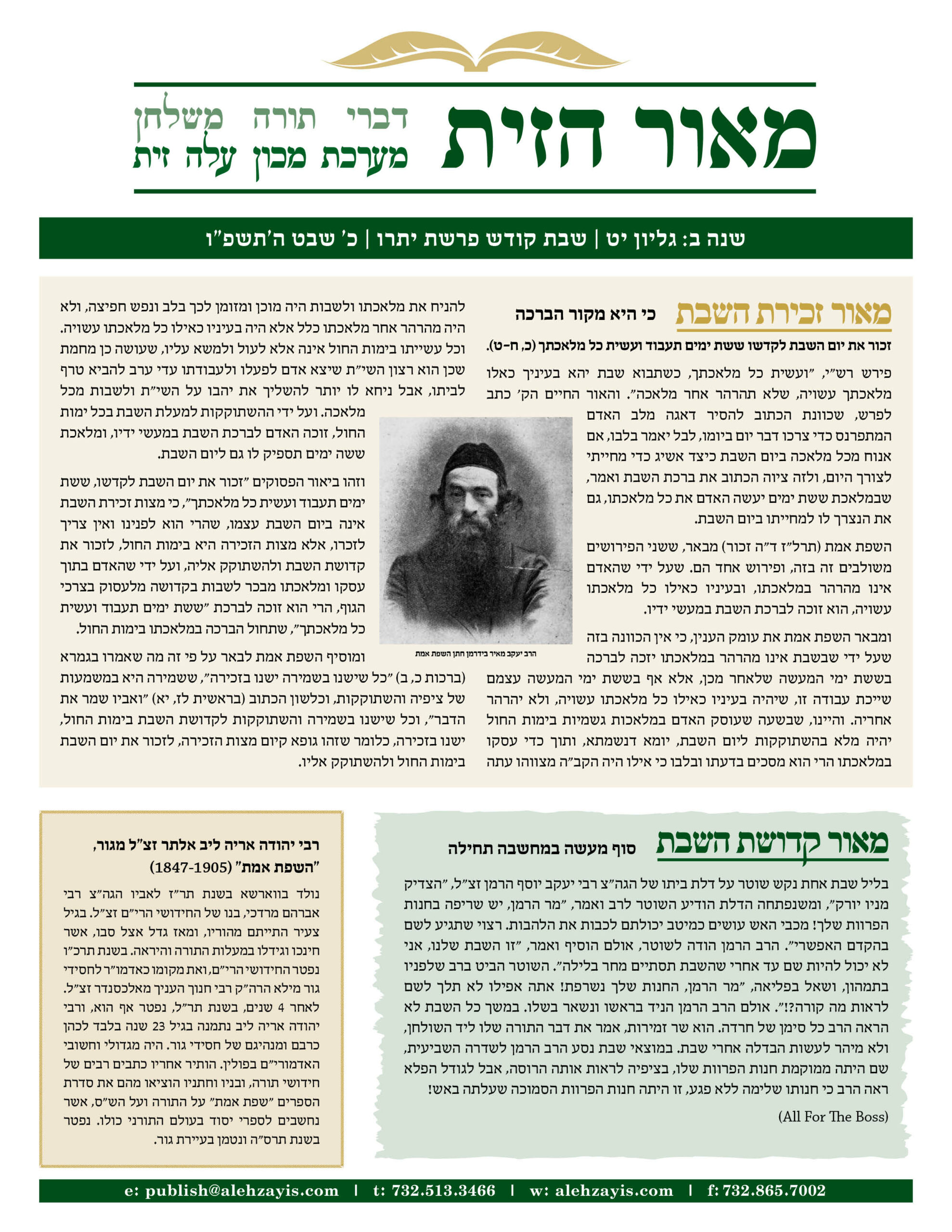
רבי יהודה אריה ליב אלתר זצ”ל מגור, “השפת אמת” (1847-1905)
נולד בווארשא בשנת תר”ז לאביו הגה”צ רבי אברהם מרדכי, בנו של החידושי הרי”ם זצ”ל. בגיל צעיר התייתם מהוריו, ומאז גדל אצל סבו, אשר חינכו וגידלו במעלות התורה והיראה. בשנת תרכ”ו נפטר החידושי הרי”ם, ואת מקומו כאדמו”ר לחסידי גור מילא הרה”ק רבי חנוך העניך מאלכסנדר זצ”ל. לאחר 4 שנים, בשנת תר”ל, נפטר אף הוא, ורבי יהודה אריה ליב נתמנה בגיל 32 שנה בלבד לכהן כרבם ומנהיגם של חסידי גור. היה מגדולי וחשובי האדמורי”ם בפולין. הותיר אחריו כתבים רבים של חידושי תורה, ובניו וחתניו הוציאו מהם את סדרת הספרים “שפת אמת” על התורה ועל הש”ס, אשר נחשבים לספרי יסוד בעולם התורני כולו. נפטר בשנת תרס”ה ונטמן בעיירת גור.
מאור המדבר
Cut the Chase
וַיָּבֹא יִתְרוֹ חֹתֵן מֹשֶׁה, וּבָנָיו וְאִשְׁתּו אֶל מֹשֶׁה אֶל-הַמִּדְבָּר (שמות יח, ה)
The Torah mentions that Yisro joined Klal Yisrael in the “midbar”. It seems superfluous to mention that he came to the midbar; from previous parshiyos it is already known that Bnei Yisrael were in the desert.
The pasuk repeats Bnei Yisrael’s location in order to praise Yisro. Yisro could have remained comfortably in Midyan, yet he chose to forsake all his riches and come to a desolate midbar in order to learn Torah (Rashi).
Yisro’s descendants learned from his actions.
The first shofet, Asniel ben Kenaz, lived in a city described as “eretz hanegev” (Shoftim 1:15). His house was bare of amenities; it contained only Torah.
At that time, the grandchildren of Yisro lived in the fruitful land of Yericho, as Rashi learns from the words “ir ha’temarim” in the next pasuk (1:16).
Yet the talmidim among Yisro’s descendants chose to forsake the fat of the land of Yericho, and they joined Asniel ben Kenaz in the midbar to learn Torah.
The implication is that in order to learn Torah, one must go to the midbar, away from all gashmius.
The pasuk in Chukas (Bamidbar 21:18) says, “Umi’midbar matanah” – Torah can be acquired in a midbar. Chazal say that Torah can be found by someone who lives as if he is in the midbar, someone whose life is devoid of luxury and indulgence.
Chazal (Midrash Hagadol, Shemos 19:2) say that just as a midbar is stripped of all comforts, so too, divrei Torah can only be retained by a person who separates himself from luxuries. The words “Umi’midbar matanah” imply that the Torah only lasts if one lives like a midbar.
Yet, the Midrash (Bamidbar Rabbah [Vilna] 1:2) enumerates the comforts and enjoyments Hashem provided Bnei Yisrael with in the midbar.
“Did I treat the Bnei Yisrael as one treats people in a desert? Normally, when a mortal king goes out to the wilderness, does he find there the comforts he has in his palace—food or drink? Yet you were slaves in Egypt, and I took you out from there. I had you recline on couches, in the manner of kings, resting on their beds. You ate the mann; I surrounded you with Clouds of Glory; and the well accompanied you, in the merit of Miriam…”
This seems to contradict the implication of previous Chazal, that the midbar is devoid of all luxuries.
Rav Avraham Yehoshua Soloveitchik shlita reconciles the opposing statements. The uniqueness of the midbar environment lies less in the absence of gashmiyus than in the fact that it is a place where one cannot pursue gashmiyus.
The mann was superb; the ananei hakavod provided utmost comfort; the Be’er shel Miriam was wonderful. At the same time, they only had what Hashem gave them, and they had no opportunity to seek additional gashmius.
The impediment to Torah learning is not gashmius per se; the problem is the pursuit of gashmius. One can learn Torah only when he is singly focused on learning. If he is lucky to be provided for by generous parents or have a comfortable yeshivah, that’s fine. But he should behave as if he is in the midbar – by taking what he’s given and not pursuing anything more. In this way, one can be zocheh to “mi’midbar matanah.”
One can take inspiration from Yisro, who left all his worldly affairs to embrace the Torah in the midbar. One can follow the example of the talmidim among Yisro’s descendants who left the opportunities of Yericho and joined Asniel ben Kenaz in the Negev – menugav m’kol tuv.
When a president is elected, he is expected to divest himself of his business affairs. He may continue owning his assets, but they are ideally placed in a blind trust. He must be single-mindedly focused on running the country, without any distractions or conflict of interest.
So too, when one learns Torah, he may continue to have comfort, but he must not pursue them. He must engage single-mindedly in Torah.
מאור שי”ח
Rav Berel Soloveitchik lived in a small apartment in Yerushalayim that reflected neither comfort nor aesthetics.
The kitchen was so small that it did not require a mezuzah upon entering; Rav Berel placed the mezuzah instead on the opposite side, since the doorway opened into the main living space. One of the walls even had a large gaping hole which the inhabitants didn’t seem too bothered by.
At one point, prospective mechutanim came to visit. They were wealthy, well established European balabatim, and the sight of the apartment clearly unsettled them. The sparseness of the home, its visible disrepair, and the absence of basic comforts left them taken aback. One could almost sense the unspoken question hanging in the air. Is this what it means to marry into a Brisker family? Is such a life expected and required?
Sensing their consternation, Rav Berel addressed it directly. He wanted to be clear that what they were seeing was not a mandate, not an ideal imposed on others, and certainly not a “Brisker requirement.” He explained:
One does not live this way because one must live this way. One lives this way because one is able to live this way.
The value was not poverty, deprivation, or austerity for its own sake. The value was independence from material need and the ability to live simply if circumstances demand it.